CG Policy · 2025
In this section7 topics
Corporate Governance Policy
Introduction
The Company, as an operator of wholesale consumer goods business under the “Makro” brand, retail consumer goods business under the “Lotus's” brand, and mall management business, and as a company listed on the Stock Exchange of Thailand, has consistently adhered to and emphasized the importance of conducting its business in accordance with the principles of good corporate governance.
The Company is committed to operating with transparency, accountability, integrity, and ethical standards, while upholding balanced responsibilities toward society, the environment, and all stakeholders. We believe that good corporate governance is a management system that helps promote appropriate and efficient management, capable of generating returns and increasing long-term value for shareholders and investors, as well as building confidence among all stakeholders, which will lead to the Company's ability to compete and grow sustainably.
Sub-Section Introduction
The Company's Board of Directors is committed to leading the organization towards sustainable growth in all dimensions. Therefore, it emphasizes and adheres to transparent and verifiable business administration and operations, taking into account the equitable benefits of shareholders and respecting the legal rights of all stakeholders under the principles of good corporate governance. This is to enhance efficiency in work processes and management processes, increase value, and build long-term confidence for shareholders, enabling the Company to achieve its goals and maintain excellence in the ethical values that are the foundation of the organization.
Therefore, the Company's Board of Directors has established a Corporate Governance Policy based on the principles of good corporate governance of the OECD (The Organization for Economic Co-operation and Development) and the Principles of Good Corporate Governance for Listed Companies 2017 (CG Code) of the Securities and Exchange Commission (SEC) and the Stock Exchange of Thailand, including the criteria under the Corporate Governance Report (CGR) of the Thai Institute of Directors Association (IOD), as well as international standards such as the ASEAN Corporate Governance Scorecard (ACGS). This is to guide directors, executives, employees, staff, and representatives of the Company in performing their duties and responsibilities. The policy will be reviewed and updated regularly every year to ensure that its content is consistent with the Company's business operations and current international best practices.
Has a Corporate Governance Policy
Yes
Policy Description
The Company continuously reviews and improves its Corporate Governance Policy and related practices to comply with laws, best business practices, and changing economic and social environments. It requires directors, executives, and employees at all levels to acknowledge and adhere to these policies as a fundamental part of their work. The Board of Directors has established the following Corporate Governance Policy;
The Board of Directors, executives, and all employees will perform their duties with responsibility, commitment, and dedication to the best interests of the Company, and will study, understand, and adhere to the guidelines in the Company's corporate governance policies and business ethics as a routine until it becomes a good organizational culture.
The Board of Directors plays an important role in determining the vision, strategy, policies, and important plans of the Company in conjunction with the executives, including the organization of a management structure that is consistent and fairly related between the Board of Directors, executives, and shareholders, and the establishment of appropriate management and business operation guidelines.
The Board of Directors and executives will be leaders and role models in ethics and the performance of duties with honesty, integrity, fairness, transparency, and accountability in accordance with the practices in the Company's corporate governance policies.
The Board of Directors, executives, and all employees and staff will adhere to fairness by treating all stakeholders equally, while also monitoring, supervising, controlling, and preventing any decisions or actions that have conflicts of interest.
Compliance with the Company's Corporate Governance Policy is considered an important indicator in evaluating the business management performance of the Board of Directors and executives, and the performance evaluation of all employees.
Policy Document Link
https://www.cpaxtra.com/storage/document/governance/corporate-governance-policy-en.pdf
Page Number in Report
Full
Policy & Practices — Board of Directors
Has Policy & Guidelines for the Board
Yes
Board Guidelines
| Guideline | Other — Please Specify | Detail |
|---|---|---|
| Nomination of Directors | Director Selection Criteria and Process The Board of Directors has appointed the Nomination and Remuneration Committee (the “NRC”) to responsible for setting policies and criteria for the selection of directors. This includes defining the qualifications of potential directors, considering diversity in knowledge, expertise, skills, and experience beneficial to the company, and aligning with the company’s business strategy (Board Skill Matrix). The committee is responsible for ensuring that selection is non-discriminatory with respect to gender, age, nationality, race, religion and other personal characteristics. A board candidate must be able to undertake the range of duties and responsibilities required of a director in its entirety. Notwithstanding, candidates must not have any disqualifications under the law and good corporate governance principles. When a board position becomes vacant, the NRC screens for potential candidates to consider and nominate for the position. Selected candidates are presented to the Board of Directors or the shareholders' meeting, or both, for consideration and approval for appointment to the vacancy. In addition to the Director Pool as source of recruitment, minority shareholders are encouraged by the NRC to nominate candidates for the board position, provided the provisions of the Articles of Association as well as legal provisions are observed. To facilitate and protect the rights of the minority shareholders in the process, the nominated candidates are voted individually at the general meeting of shareholders for the agenda of director election. Moreover, the company recognizes the importance of diversity in the board structure (Board Diversity). The Company sets policies and criteria for the selection of directors which includes defining the qualifications of potential directors, considering diversity in knowledge, expertise, skills, and experience beneficial to the company, and aligning with the company’s business strategy (Board Skill Matrix). The selection is non-discriminatory with respect to gender, race, religion, and age. The Board of Directors is composed of at least one non-executive director who is equipped with competency and experience in the particular business or industry in which the Company operates. At present, there are nine non-executive directors with such competency and experience. | |
| Determination of Director Remuneration | Remuneration of Directors The Nomination and Remuneration Committee is responsible for determining remuneration for directors. In doing so, many performance benchmarks are taken into consideration, for instance, performance outcome and consistency with corporate goals and long-term benefits, industry remunerations standards and comparison with other companies in the industry peers of similar size of business, suitability of assigned duties responsibilities, and performance of directors, attractiveness to retain skillful directors to drive the Company to achieve short-term and long-term goals. Notwithstanding, such remuneration shall be approved by the shareholders’ meeting. | |
| Independence of the Board of Directors from the Management | Independence of the Board from the Managements The Board of Directors plays a fundamental role as the organization’s leader in driving sustainable growth. They have the duty and responsibility to oversee the Managements to ensure that operations align with the company’s objectives and primary goals, based on social responsibility, environmental stewardship, and fairness to shareholders and stakeholders. The responsibilities of the Board of directors, according to good corporate governance principles, include setting the direction, business operations, objectives, main goals, as well as key strategies and policies that create sustainable value for the company. These responsibilities are delegated to the Managements for implementation, with the Board providing guidance to ensure a long-term perspective. The Board closely monitors and oversees these operations, as they are appointed by shareholders to safeguard the company’s interests, adhering to the principle of Fiduciary Duty. The Board and the Managements must work together, making the Board’s effectiveness in performing their duties closely linked to the Managements to build a good relationship between them. In addition, establishing an appropriate corporate governance structure is crucial for building a good relationship between the Board of Directors and the Managements, ensuring smooth collaboration. This involves clearly defining the scope, roles, duties, and responsibilities of the Board and the Managements. Such clarity helps enhance operational efficiency and strengthens the check and balance mechanisms, allowing the Board to independently oversee management’s performance. | |
| Director Development | Development of Directors and Executives
| |
| Board Performance Evaluation | Assessment of the Board Performance The Board of Directors requires an annual performance assessment of the Board of Directors and sub-committee in both of whole board or committee assessment and the individual self-assessment. The assessment form has an objective to use the results of assessment for developing the efficiency of performing duties of the Board and sub-committees. Criteria and Process in Performance Assessment The Company arranges for an annual performance assessment of the Board of Directors and sub-committees in both whole board or committee assessments and individual self-assessments. The assessment criteria are as follows:
Performance Assessment of the Board of Directors as a Whole Board Performance 1) The structure and qualifications of the Board of Directors 2) Roles, duties, and responsibilities, of the Board of Directors 3) Board meetings 4) Dynamic of the Board performance 5) Relationship with the management 6) Board development Assessment of the Board of Directors as an Individual 1) Board qualifications 2) Preparedness duties of directors 3) Participation in meetings 4) Roles, duties and responsibilities 5) Relationship with the Board and management Topic for the performance assessment of the sub-committees Performance Assessment of the Sub-Committees as a Whole Committee 1) The structure and qualifications of the sub-committee 2) Sub-committee meetings 3) Roles, duties, and responsibilities of the sub-committee 4) Sub-committee reporting Performance Assessment of the Sub-Committees as an Individual 1) The structure and qualifications of the sub-committee 2) Sub-committee meetings 3) Roles, duties, and responsibilities of the sub-committee Assessment criteria (as a percentage of the full score) are as follows: Above 85% = excellent Above 75% = very good Above 65% = good Above 50% = fair Below 50% = need improvement The process of performance assessment is that the Company Secretary and the secretary of the subsidiaries' committees are in charge of distributing the annual assessment form to all directors for evaluation at the end of each year and preparing a summary of the assessment results to report to the Board of Directors for acknowledgement. The Company also utilizes the evaluation results to enhance the effectiveness of the Board’s performance and support the Board in carrying out its duties in the best interests of the Company. | |
| Corporate Governance of Subsidiaries and Associated Companies | Governance Mechanisms The Company has established policies for governing the operations of its subsidiaries and associated companies. The objective is to set operational standards, enabling the company to oversee the management of these entities and ensure their compliance with the company’s policies, as well as relevant laws, regulations, announcements, and government orders. This is to protect the investment interests in these subsidiaries and associated companies. The details are as follows:
| |
| Other guidelines regarding the board of directors | Policies and Guidelines for Shareholders and Stakeholders | Please see the details in the attachment 8 |
Code of Conduct
Introduction
The Company recognizes that sustainable long-term success is not defined solely by financial performance, but also by the manner in which business operations are conducted. Such success is underpinned by integrity, transparency, accountability, fairness, and respect for equitable treatment, while ensuring a balanced consideration of the interests of all stakeholder groups.
As a leading seamless wholesale and retail platform (B2B and B2C) in Asia, driven by technology and innovation, the Company firmly upholds the principle that sustainability must be founded upon ethical business conduct and responsible value creation. The Company is committed to delivering sustainable value to customers, business partners, employees, shareholders, and society as a whole.
Sub-Section Introduction
The Board of Directors has approved and implemented a Code of Conduct, with regular reviews of the principles and practices to ensure that the current Code remains comprehensive, appropriate, and responsive to the evolving business environment and ensures alignment with corporate governance principles and international best practices. The Code of Conduct is designed to be practically implementable by employees at all levels and to serve as a consistent framework for operations across all jurisdictions in which the Company and its subsidiaries conduct business.
The key elements of the current Code of Business Conduct encompass ethical business practices, respect for and compliance with applicable laws and regulations, adherence to corporate values, sound governance and management practices, and the promotion of a corporate culture grounded in transparency, accountability, and responsibility toward all stakeholder groups. The Code of Conduct establishes standards that are aligned with the Company’s vision, mission, values and the expectations of society.
The Company requires supervisors at all levels to oversee and actively promote awareness, understanding, and recognition of the importance of the Code of Business Conduct among employees under their supervision. Supervisors are also responsible for monitoring strict compliance to ensure that the Code serves as a fundamental mechanism in driving the organization toward genuine and sustainable growth.
Has a Business Code of Conduct
Yes
Code of Conduct Description
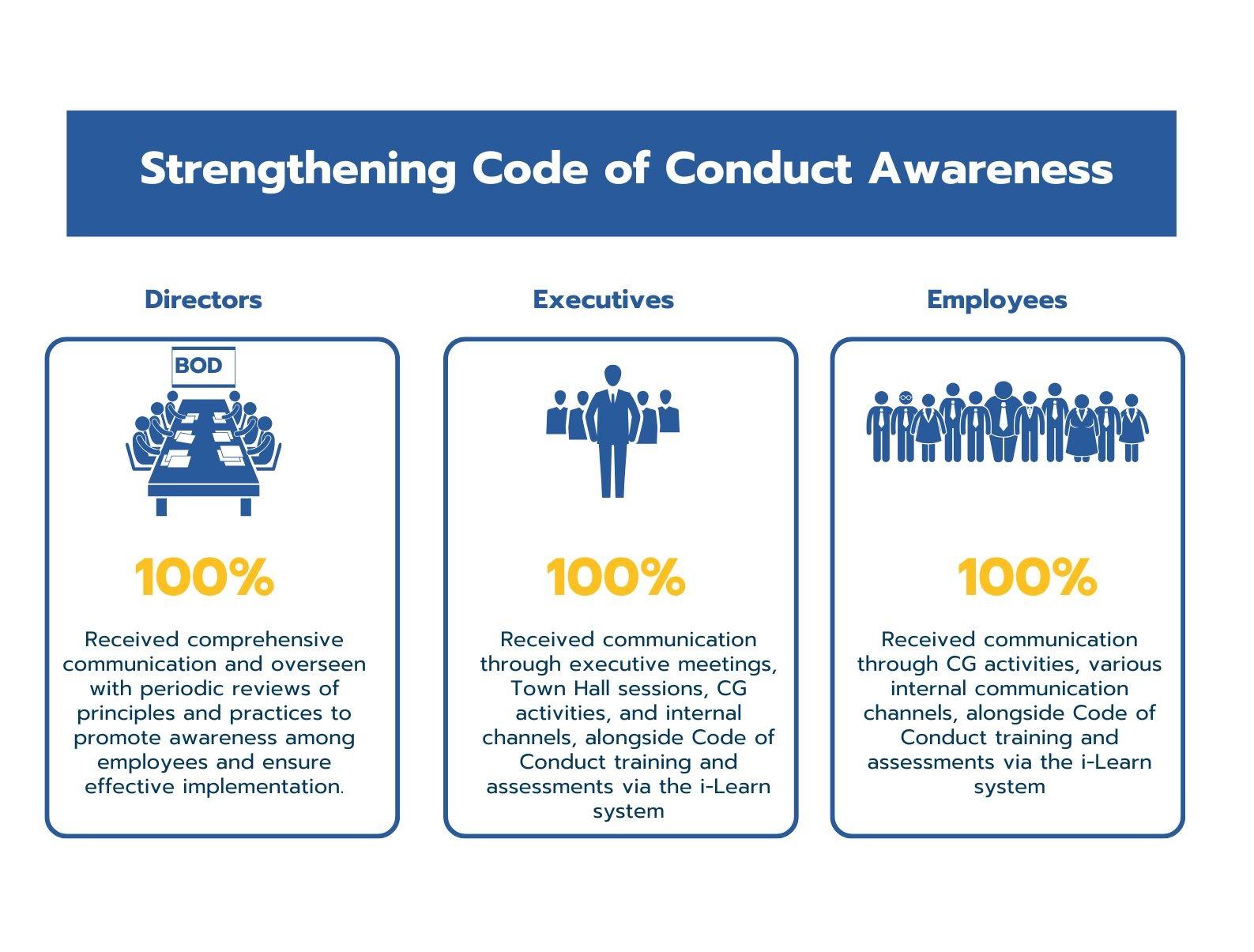
The Company places significant importance on systematically and continuously promoting and monitoring compliance with the Code of Conduct. Communication and awareness-raising are established as key processes, encompassing all levels of the organization from the Board of Directors, Executives and all employees, including subsidiaries, to ensure that operations strictly adhere to the prescribed policies and guidelines.
1. Policy Communication from the Board of Directors and Top Executives
The Board of Directors emphasizes its role in supporting, promoting, and reinforcing awareness, while overseeing management to lead by example. The Company’s commitment to business ethics and good corporate governance is communicated through Board meetings, Top executive meetings, Town Hall sessions, and various internal communication channels to ensure that employees at all levels receive consistent and comprehensive communication.
In addition, the Company continuously organizes corporate governance and business ethics initiatives to strengthen a corporate culture grounded in transparency and accountability. In 2025, key activities included:
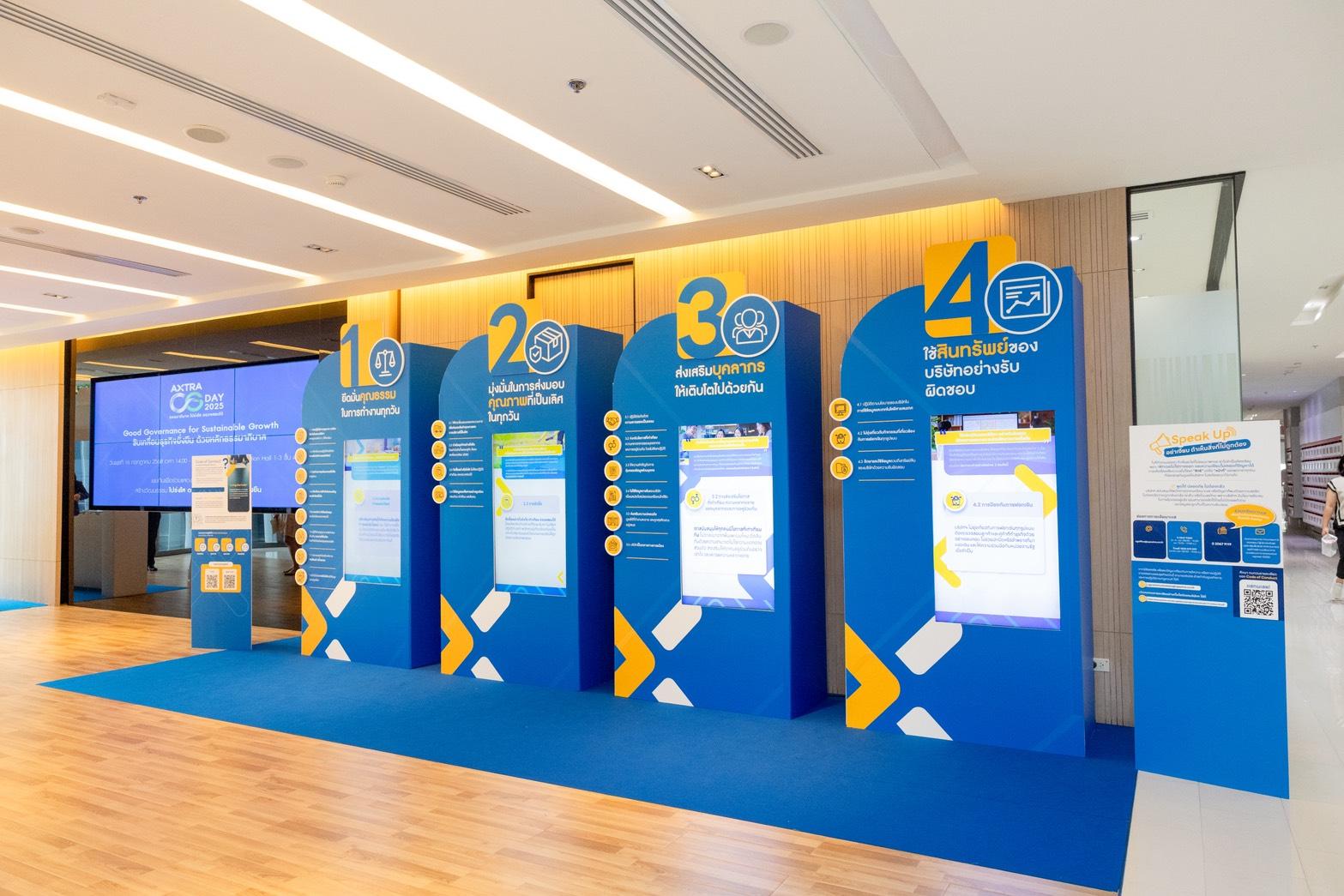
AXTRA CG DAY: Good Governance for Sustainable Growth
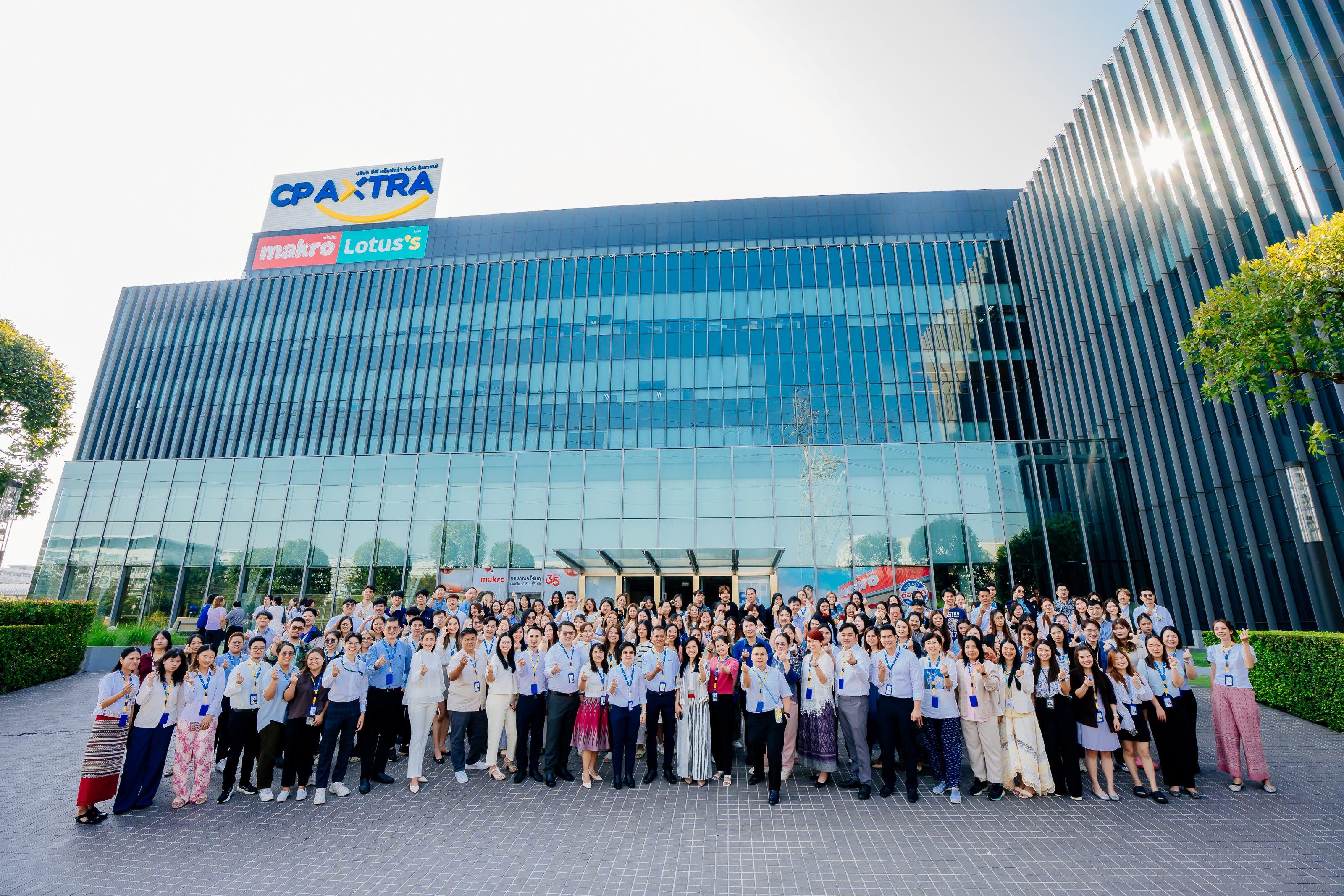
The Company organized “AXTRA CG DAY: Good Governance for Sustainable Growth” to enhance knowledge and understanding of good corporate governance among directors, executives, and employees. The event featured policy perspectives and vision sharing from top executives, together with engagement activities. The event was conducted in a hybrid format by more than 10,000 participants from the head office, retail and wholesale stores nationwide.Anti-Corruption Day 2025
The Company organized the 2025 Anti-Corruption Day event in an online format under the theme “No Corruption Is It Really Possible?” to reaffirm its commitment to combating corruption and to foster a transparent, accountable, and sustainable corporate culture.Annual Supplier Code of Conduct Training 2025
The Company conducted its annual supplier training program to reinforce awareness and compliance with the Supplier Code of Conduct among business partners, while promoting responsible environmental management and sustainable supply chain practices.Participation in the International Anti-Corruption Day Run for Dad 2025
The Company participated in the International Anti-Corruption Day Run for Dad 2025, organized by the Anti-Corruption Foundation, to demonstrate its support for anti-corruption efforts and ethical business practices.Weaving Goodness CP Axtra Recognition Event
The Company organised the “Weaving Goodness CP Axtra”, a program recognising and collectively reinforcing ethical values across the organizationevent to recognize employees who exemplify strong ethical values. The event also featured exhibitions showcasing employees’ good deeds from nationwide, reinforcing ethical values as the foundation of consumer trust and organizational pride.
2. Training and Acknowledgement
The Company provides Code of Conduct training through both e-Learning and workshop formats. Employees are required to formally acknowledge and commit to compliance with the Code of Conduct via the Company’s i-Learn system.
In 2025, all new employees completed mandatory orientation training programs and a knowledge assessment, covering the Code of Conduct, Anti-Corruption, Conflict of Interest, Risk Management, Compliance Framework, Information Security, and Whistleblowing, etc. And all existing employees completed the Annual Code of Conduct refresher training with a 100% participation rate. In addition, employees participated in a governance and compliance perception survey to assess their level of understanding. The survey results are utilized to continuously enhance and strengthen the Company’s corporate governance framework and compliance practices.
In addition, employees at the Manager level and above are required to participate annually in the Manager Ethics program, which reinforces leadership accountability in demonstrating ethical conduct, supervising subordinates, and making decisions aligned with the Business Code of Conduct framework.
3. Integration into Human Resource Management Processes
The Company has integrated the Code of Conduct into its human resource management framework. Adherence to ethical standards and compliance with the Code of Conduct are incorporated as key criteria in the annual performance evaluation of employees at all levels. The evaluation covers behaviors aligned with the Company’s core values, integrity, accountability, and compliance with corporate policies and regulations, ensuring that employees uphold ethical standards in performing their assigned responsibilities. This approach aims to embed the Code of Conduct into the Company’s corporate culture and serves as a key mechanism in strengthening a robust and sustainable corporate governance framework.
4. Monitoring and Performance Evaluation
The Company has established a systematic and continuous process to monitor and evaluate compliance with the Code of Conduct. The Corporate Governance and Compliance Department, in collaboration with the Human Resources Department, is responsible for overseeing implementation and periodically reporting the results to the Corporate Governance and Sustainable Development Committee, as well as escalating significant matters to the Audit Committee, as appropriate. The evaluation covers training completion rates, conflict of interest disclosures, policy acknowledgement, and the results of governance and compliance perception surveys. These measures are designed to ensure that employees at all levels are adequately informed and able to consistently uphold and apply the Code of Conduct in their daily operations.
In addition, the Company has established mechanisms to monitor compliance with the Code of Conduct and to prevent misconduct involving fraud or corruption through whistleblowing channels, as well as internal audit processes. Any director, executive, or employee who fails to comply with the principles of good corporate governance, breaches the Code of Conduct, or violates applicable laws, regulations, or the Company’s policies shall be subject to disciplinary action in accordance with the Company’s established disciplinary framework.
Code of Conduct Link
https://www.cpaxtra.com/storage/document/governance/code-of-conduct-en.pdf
Page Number in Report
Full
Code of Conduct Practices
| Guideline | Other — Please Specify | Detail | Document Link | Page Number in Report |
|---|---|---|---|---|
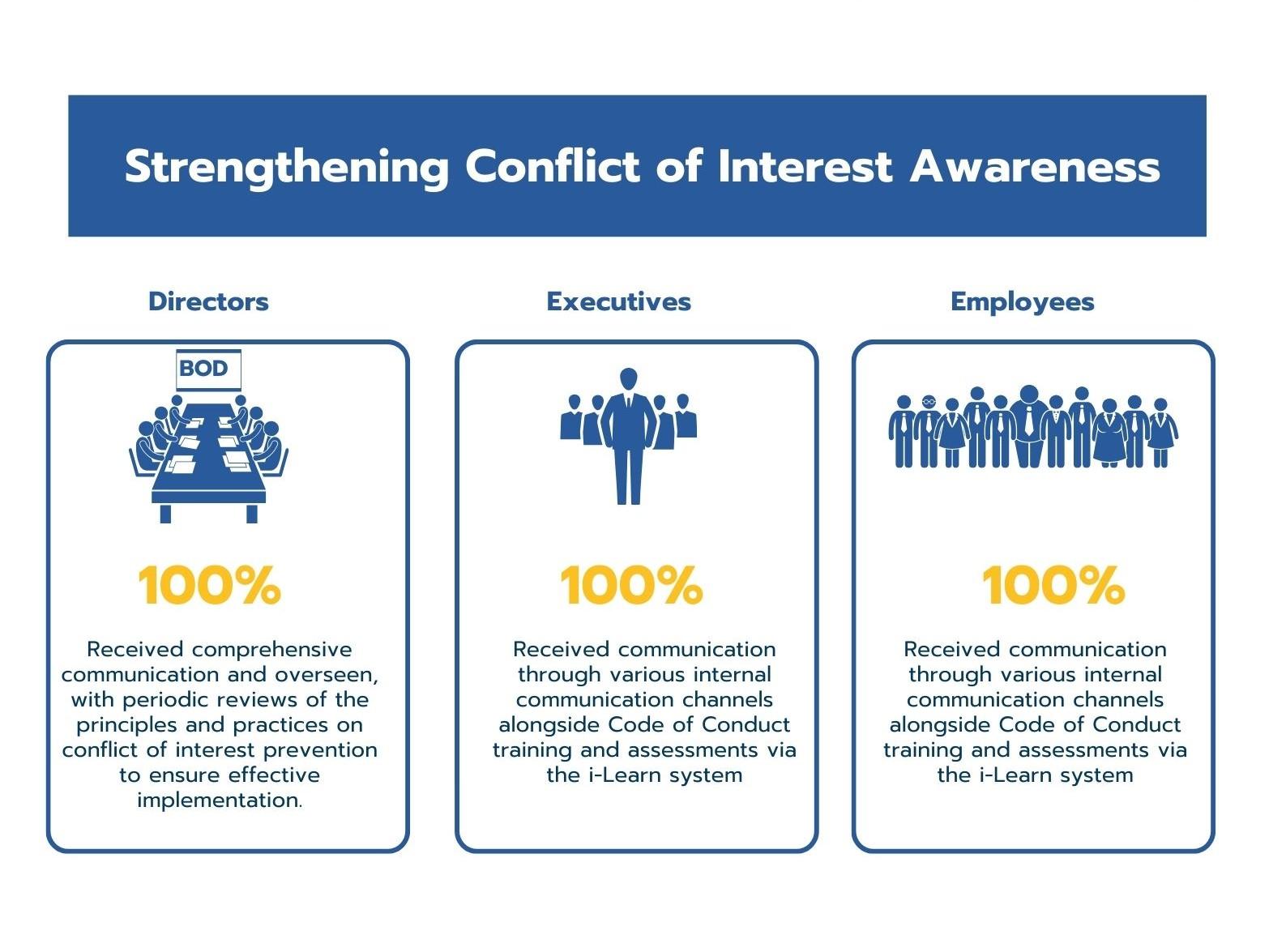
| Prevention of Misuse of Inside Information | The Company is committed to conducting business with transparency in accordance with good corporate governance principles, taking into consideration the Company's best interests. Business-related decisions and operations must be free from Conflicts of Interest (COI) or involvement in activities that would benefit oneself or related persons, or conflict with the company's interests in ways that could cause damage to the company, lead to misconduct, or potentially result in corruption. The Board of Directors has approved and implemented the Conflict of Interest Policy to provide directors, management, and employees with guidelines for performing their duties with integrity, transparency, and accountability, thereby safeguarding the company's best interests by refraining from seeking personal gains or benefits for related parties, and avoiding potential conflicts of interest that may arise with the company. In addition, the Company has established Conflict of Interest Management Practices and formally incorporated them into the Business Code of Conduct to enhance employees’ understanding of situations that may give rise to potential conflicts of interest and the importance of disclosing relationships with close relatives or related parties. These guidelines serve as a preventive mechanism to mitigate risks associated with conflicts of interest and enable personnel to exercise appropriate judgment in preventing and resolving potential conflicts based on integrity and ethical principles, thereby safeguarding the Company’s best interests. In 2025, the Board of Directors monitored and oversaw the policies and practices relating to the prevention of conflicts of interest as follows:
Details of conflict of interest prevention guidelines are provided in the "Code of Conduct" | https://www.cpaxtra.com/storage/document/governance/conflict-of-interests-policy-en.pdf | Full | |
| Anti-corruption | The company places great importance on and is committed to conducting business with integrity, transparency, and fairness under the principles of good corporate governance, the Code of Conduct, and international best practices. The company recognizes that corruption can negatively impact its reputation and the confidence of investors, business partners, and customers. Additionally, corruption poses an obstacle to the company’s sustainable growth and the overall economic development of the country. To reinforce its commitment, the company has established anti-corruption principles and practices in the Code of Conduct. These principles demonstrate the company’s dedication to upholding the highest ethical standards in operations and complying with relevant laws. The company actively promotes awareness and fosters a strong sense of responsibility among employees at all levels to combat corruption. Moreover, internal control systems have been implemented to prevent fraud, extortion, and bribery in all forms. As a result, all employees are strictly prohibited from engaging in or accepting any form of corruption under any circumstances, covering all business activities of the company across all countries and relevant units. Furthermore, the Board of Directors has established an Anti-Corruption Policy to serve as a guideline for directors, executives, and all employees to follow. This policy is considered an integral part of the company's Work Rules, and all employees are required to study, understand, and strictly adhere to the Anti-Corruption Policy. Any employee who violates or fails to comply with this policy may be subject to disciplinary action in accordance with company regulations, with the most severe penalty being termination of employment or contract cancellation. If the violation involves legal provisions, appropriate legal action will be taken. Nevertheless, the company has a policy that ensures no employee will be demoted, punished, or subjected to any negative consequences for refusing to engage in corrupt activities, even if such refusal results in the company losing business opportunities. Further details of the Company’s Anti-Corruption Policy are available at https://www.cpaxtra.com/en/corporate-governance/policies-and-corporate-document The Company remains committed to the continuous implementation of its Anti-Corruption Policy, resulting in its certification as a member of the Thai Private Sector Collective Action Against Corruption (CAC) on 26 December 2025. The certification is valid for three years (2025 - 2028). The Board of Directors and Top Executives place continuous emphasis on Anti-Corruption, demonstrating a strong tone at the top. In 2025, the Company continued to enhance awareness and understanding among employees at all levels to ensure strict compliance with the Anti-Corruption Policy. Key initiatives undertaken included the following;
| https://www.cpaxtra.com/storage/document/anti-corruption-policy/anti-corruption-policy-en.pdf | Full | |
| Whistleblowing and Protection of Whistleblowers | The company recognizes the importance of whistleblowing and complaints, so we have established a Whistleblowing Policy. This policy serves as a tool to prevent potential damage to our company's assets and reputation. It encourages both our staff and all internal and external stakeholders to report any practices that conflict with or are suspected of violating laws, regulations, ethics, or rights. This helps ensure we conduct business correctly and transparently, treating all stakeholders fairly in line with good corporate governance principles and international standards.
Channels for Complaints and Whistleblowing Mail to: Chairman of the Board or Chairman of the Audit Committee or Group Chief Executive Officer or CP Axtra Public Company Limited 1468 Phatthanakan Road, Phatthanakan subdistrict, Suan Luang District, Bangkok 10250 Email: cgoffice@cpaxtra.co.th Phone: 0-2067-9300 (Monday - Friday 08:00 AM - 12:00 PM, 1:00 PM - 5:00 PM) Toll-free: 1800019099 (Everyday 8:00 AM to 7:00 PM) (Operated by an independent third party and available in four languages: Thai, English, Burmese, and Khmer) Fax: 0-2067-9119 Complaint Handling Process Complainants can report issues through the channels listed above. While we encourage complainants to identify themselves so we can follow up with questions, provide progress updates, and explain findings, they may choose to remain anonymous if they feel their safety might be at risk. Once we receive a complaint, we will take appropriate action or forward it to relevant persons, considering their independence in handling the reported issues. We ensure fair, transparent, and accurate investigation of facts and monitor progress to handle all complaints appropriately.
False Reporting with Malicious Intent If the company proves that a report was intentionally false, distorted facts, or made to defame others, the person who made that report will be considered violating the company's code of conduct. Penalties will be determined according to company regulations and/or relevant laws. If there is a deliberate violation resulting in the disclosure of information, the company will take disciplinary action in accordance with its regulations and/or pursue legal action as deemed appropriate. Protection for Whistleblowers and Related Persons We provide appropriate and fair protection to whistleblowers and complainants. This means no job transfers, changes in position, job nature, workplace, suspension orders, intimidation, work interference, termination, or any other unfair treatment. Complaint information is kept confidential unless legally required to be disclosed. Anyone with access to complaint information must maintain confidentiality and not disclose it to others unless legally required. Penalties The company enforces disciplinary actions against employees who violate company work regulations and takes enforcement and punishment seriously. We actively communicate with and encourage employees to be mindful of work ethics. We also use complaints to improve our operations and establish better preventive measures. | https://www.cpaxtra.com/storage/document/governance/whistleblowing-policy-en.pdf | Full | |
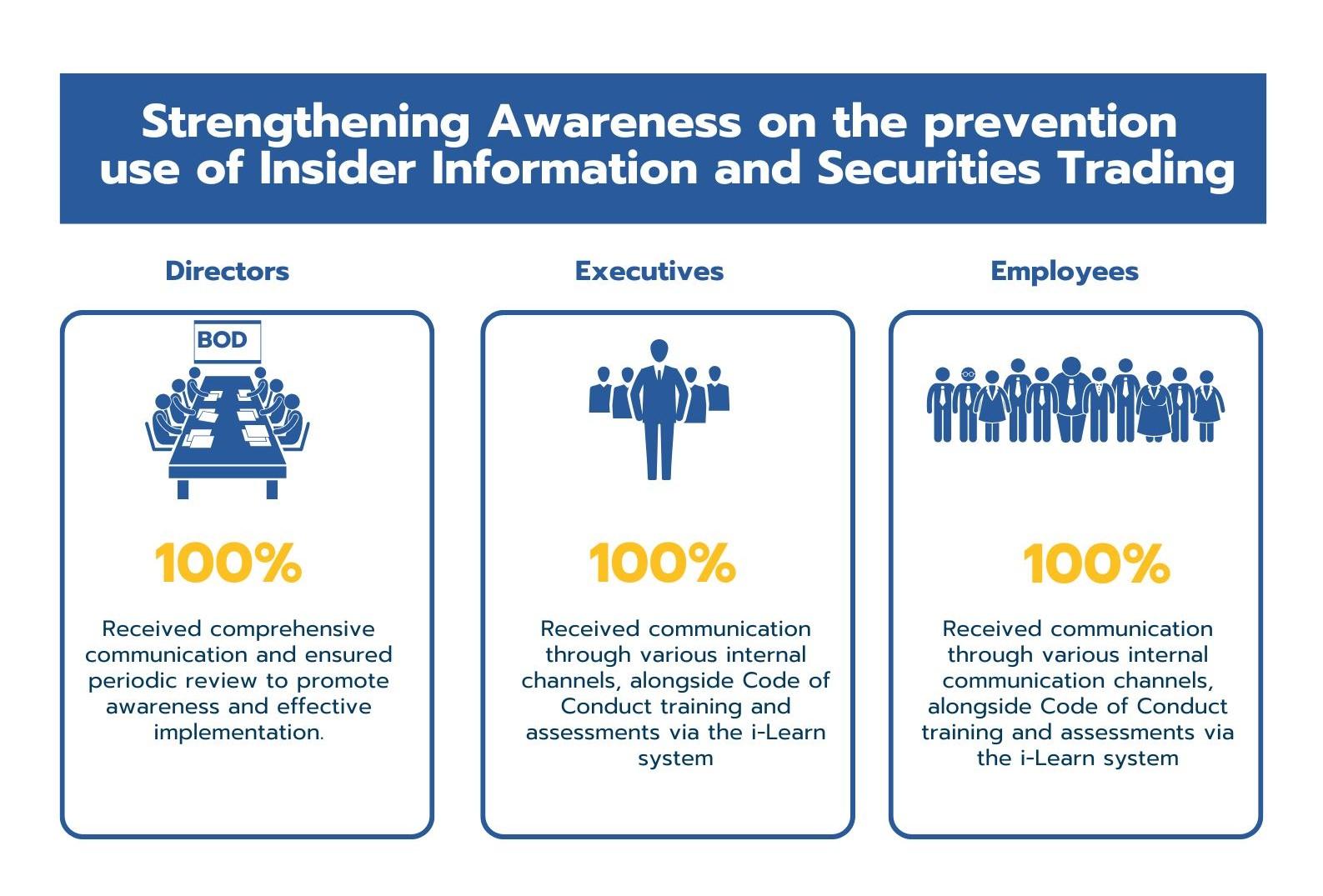
| Preventing the Misuse of Inside Information | As a company listed on the Stock Exchange of Thailand, the Company upholds the principle of ensuring equality and fairness to all shareholders. The Company strictly prohibits the misuse of inside information for personal gain. All employees are required to comply with the Company’s regulations governing the use of inside information and must not use any non-public information to benefit themselves or others, directly or indirectly, whether or not any consideration is received. The Company has established clear guidelines on the prevention of insider information and securities trading as part of its Code of Conduct. These guidelines are regularly communicated to directors, executives, employees, staff, and any other individuals with access to inside information. The objective is to reinforce the Company’s commitment to equitable treatment of shareholders and strict adherence to internal regulations regarding the handling of confidential information. In 2025, the Company continued to monitor and strengthen its oversight measures to prevent use of insider Information and securities trading as follows:
| https://www.cpaxtra.com/storage/document/governance/code-of-conduct-en.pdf | Page 50-51 | |
| Prevention of money laundering | The Company recognises the importance of, and the potential impacts arising from, involvement in transactions related to money laundering. Accordingly, the Company has established principles and guidelines under its Code of Conduct to demonstrate its commitment to preventing and avoiding any involvement in money laundering in all countries where it operates. The Company places emphasis on preventing and avoiding money laundering in all jurisdictions in which it conducts business by ensuring that its accounts, funds, and assets are properly maintained and managed in accordance with applicable laws, to ensure that the Company’s business operations are not associated with any illegal activities related to money laundering. The Company conducts its business based on the principle of selecting and transacting with customers and business partners who are reliable and operate lawfully, while exercising due care when dealing with individuals or legal entities for which there are reasonable grounds to suspect involvement in unlawful activities. The Company does not provide assistance or engage in any acts intended to conceal or disguise the source of funds or assets related to illegal acts, nor does it enter into any transactions that may result in such funds or assets being converted, transformed, or otherwise changed into assets obtained through lawful means, including any form of support or facilitation of such acts. In addition, the Company and its employees cooperate with relevant authorities in the prevention and suppression of money laundering and strictly comply with applicable laws. In the event of any doubts or concerns, employees may seek advice from the Company’s legal department or legal advisors. | https://www.cpaxtra.com/storage/document/governance/anti-money-laundering-policy-en.pdf | Full | |
| Giving or receiving gifts, entertainment, or business entertainment | In addition to the Anti-Corruption Policy and the anti-corruption provisions outlined in the Code of Conduct, the Company has established guidelines on sponsorships, the giving and receiving of gifts and tokens of appreciation, hospitality, and charitable donations. These guidelines apply to the Company and its subsidiaries and are strictly adhered to by employees at all levels. The Company requires that any giving or acceptance of gifts, assets, or other benefits from parties related to the Company’s business must not be made with the expectation of any return benefit or advantage that may be construed as corruption. In 2025, the Company continued to implement the following measures to promote transparency in business operations, prevent conflicts of interest, and support sustainable management;
| https://www.cpaxtra.com/storage/document/anti-corruption-policy/no-gift-policy-letter-en.pdf | Full | |
| Compliance with laws, rules and regulations | The Company recognizes the importance of conducting its business in compliance with applicable laws, regulations, and requirements in all jurisdictions where it operates, as well as adhering to internal rules and international standards. Such compliance is aligned with the principles of good corporate governance and the Code of Conduct, thereby enhancing the Company’s credibility and fostering public trust and acceptance. The Company has established principles and guidelines under its Code of Conduct, requiring directors, executives, employees, and workers to study, fully understand, and strictly perform their duties in compliance with applicable laws and regulations, the Company’s Articles of Association, policies, rules, regulations, orders, and announcements, as well as the laws, rules, and requirements of relevant authorities, while respecting local customs, traditions, and accepted cultural practices in each jurisdiction where the Company operates. In 2025, the Company continued to promote compliance with applicable laws, regulations, and requirements through the following measures;
| https://www.cpaxtra.com/storage/document/governance/code-of-conduct-en.pdf | Page 16-17 | |
| Use and maintenance of data and assets | The Company places importance on the use, care, and protection of the Company’s data and assets in all respects and has therefore established principles and guidelines under its Code of Conduct. Directors, executives, and employees at all levels are required to perform their duties with responsibility and integrity, and with due regard to the best interests of the Company. The use and safeguarding of the Company’s data and assets must be conducted in an appropriate, proper, and efficient manner and must not be used for personal benefit or for the benefit of external parties without authorisation. The Company regards all of its assets, whether tangible or intangible, including all types of data, as valuable resources that are essential to its business operations. Employees at all levels are required to exercise the highest level of care and responsibility in safeguarding and using the Company’s data and assets, and to protect the Company’s confidential information from unauthorised access, disclosure, or use, in order to maintain credibility and mitigate risks that may cause damage to the Company. The Company strictly prohibits the misuse of its data or assets or their use for personal gain, unless formally authorised, and requires employees to strictly comply with applicable laws, data security standards, and relevant guidelines. Employees are also required to respect the intellectual property rights of others and must not infringe or use the intellectual property of third parties without proper authorisation. In addition, the use of the Company’s trademarks, logos, or other intellectual property by external parties must be subject to prior approval or a clear business agreement as stipulated by the Company. Such measures form part of the Company’s internal control system and risk management framework to support good corporate governance and sustainable business operations. | https://www.cpaxtra.com/storage/document/governance/code-of-conduct-en.pdf | Page 62-63 | |
| Anti-competitive | The Company recognises the importance of fair trade competition and has therefore established measures to prevent unfair competition as a key component of its Code of Conduct. The Company is committed to promoting free, fair, and open business competition to achieve maximum benefits for consumers and the overall economy. Accordingly, the Company requires that its business operations in all areas be conducted in compliance with the Trade Competition Act and other applicable laws. In 2025, the Company undertook the following actions to prevent unfair competition;
Furthermore, this Guideline supports a free and fair market economy while promoting trade practices that provide tangible benefits to consumers and society. It sets out practices that encourage free and fair competition, as well as trade practices that contribute positively to consumer welfare and societal well-being. | https://www.cpaxtra.com/storage/document/governance/code-of-conduct-en.pdf | Page 28-29 | |
| Cyber security | The Company is committed to becoming a leading Retail Technology organization in Thailand and Southeast Asia, while developing a seamless online-to-offline retail ecosystem to enhance operational efficiency and strengthen long-term competitiveness. Recognising data and information systems as strategic assets that support both B2B and B2C operations, the Company has established the Information Security Policy (ISP) as a comprehensive framework for systematic information security management. The policy applies at both the corporate and subsidiary levels, aligns with applicable legal requirements and the guidelines of the Charoen Pokphand Group, and emphasises structured security management and effective cybersecurity risk management to foster confidence among shareholders, investors, customers, and all stakeholders. The Company has appointed the IT & Security Committee to oversee information technology infrastructure, cybersecurity protection, IT service continuity, and compliance with relevant laws and regulations. The Committee operates as part of the Risk Management Committee to ensure that IT risks are managed in alignment with the Company’s strategic objectives. The Company strictly complies with the Cybersecurity Act B.E. 2562 (2019). The Company continuously implements preventive and responsive measures to mitigate cybersecurity risks through the following initiatives:
| https://www.cpaxtra.com/storage/document/sustainability/makro-information-security-policy-en.pdf | Full | |
| Environmental management | To ensure preparedness for future changes, the Company places significant emphasis on environmental matters as part of its risk management and long-term competitiveness strategy. Key focus areas include energy management, water management, waste and pollution management, and greenhouse gas emission reduction. These efforts are aligned with internationally recognized sustainability frameworks, including the Ten Principles of the United Nations Global Compact (UN Global Compact), the United Nations Sustainable Development Goals (SDGs), and the Company’s sustainability strategy, “Living Right, Living Well, Living Together” (Heart-Health-Home). The Company values environmentally responsible business operations, the efficient use of resources, and the minimization of impacts on ecosystems and biodiversity to ensure that essential resources are preserved for future generations. To demonstrate its commitment to social and environmental responsibility, the Company has established relevant policies and strategies, including the Environmental Policy and Strategy, the Energy Policy, and the Sustainable Procurement Policy. These serve as guiding frameworks for energy management and promoting efficient and effective resource utilisation. Further details on Environmental management are provided under Section 3.3: Sustainability Management in the Environmental Dimension. | https://www.cpaxtra.com/storage/document/sustainability/environmental-policy-en.pdf | Full | |
| Human rights | The Company is committed to conducting business in accordance with the Human Rights and Labour Practices Policy, covering employees, customers, business partners, and all stakeholders throughout the value chain. The Company strives to prevent human rights violations and adverse impacts arising from its business activities. The Board of Directors has approved and announced the Human Rights and Labour Practices Policy, emphasising respect for fundamental human rights and supporting the protection of such rights. The Company is committed to treating all stakeholders fairly and without discrimination, upholding human dignity, inherent rights and freedoms, and equality without discrimination based on race, religion, gender, color, language, ethnicity, origin, or any other status. The Company promotes respect for human rights and fair labor practices in accordance with international standards and applicable laws in all countries where it operates. The Company is committed to conducting its operations in line with the Universal Declaration of Human Rights (UDHR), the United Nations Global Compact (UN Global Compact), the United Nations Guiding Principles on Business and Human Rights (UNGPs), and the International Labour Organization’s Declaration on Fundamental Principles and Rights at Work (ILO). The Company implements its human rights and labor practices through various measures, including promoting equality and non-discrimination, ensuring due care in respecting the rights of all relevant stakeholders, and aligning its business operations with human rights protection principles under applicable national laws and international standards. The Company has established strategies and risk management plans to address potential human rights impacts, put in place protection and remediation mechanisms where incidents occur, and provided channels for employees, communities, and stakeholders to engage in dialogue on related matters, fostering mutual understanding, collaboration, and shared value creation. Further details on human rights are available under Section 3.4.1: Social and Human Rights Policies and Practices. | https://www.cpaxtra.com/storage/document/sustainability/human-right-policy-en.pdf | Full | |
| Occupational health and safety | The Company is committed to conducting its business with due consideration for the safety, well-being, and quality of life of employees and all parties involved in its operations. Effective management of occupational health, safety, and the working environment is regarded as a critical factor supporting sustainable development and continuous operational improvement. The Company promotes and supports a safe and healthy working environment in compliance with applicable laws, regulations, and international standards. Digital technologies are applied to enhance safety management and operational efficiency. Furthermore, the Company strives to embed a strong safety culture across the organization, aiming to achieve zero workplace accidents and to reduce the risk of occupational illnesses among employees and stakeholders throughout the value chain. This approach forms part of the Company’s strategic framework, with ongoing monitoring and continuous improvement of its management systems. The Board of Directors has approved and implemented the Safety, Occupational Health, and Workplace Policy and Guidelines, and oversaw their effective implementation in practice. In addition, the Company has established a Safety Management Committee to drive policy direction, review safety standards and targets, and monitor overall safety performance. The Committee reports to the Corporate Governance and Sustainable Development Committee at least twice per year. Further details on occupational health and workplace safety management are available in Section 3.4.2: Employee and Labor Management Plan | https://www.cpaxtra.com/storage/document/sustainability/safety-occupational-health-and-workplace-policy-en.pdf | Full | |
| Other guidelines related to business code of conduct | Code of Conduct Governance Framework | In addition to the Code of Conduct practices previously disclosed, such as conflict of interest prevention, anti-corruption, and whistleblowing and whistleblower protection, the Company’s Code of Conduct also encompasses other key practices, which are categorized into 4 principal areas as follows: 1. IntegrityThe Company has established guidelines governing donations and sponsorships, connected transactions, and transparency in business operations to prevent the improper use of position, authority, or corporate resources. Clear standards are in place to ensure prudent, transparent, and auditable disclosure and business decision-making processes, thereby safeguarding the interests of the Company and its shareholders. 2. QualityThe Company is committed to delivering high-quality and safe products and services while conducting business sustainably. This includes transparent procurement processes and responsible marketing communications to build trust with customers and business partners. The Company continuously enhances operational standards throughout the value chain, which is essential to maintaining competitiveness and achieving long-term growth. 3. PeopleThe Company promotes diversity, equality, and fairness in the workplace, ensuring mutual respect and non-discrimination. It upholds human rights and international labor standards, while implementing clear guidelines on personal data protection and political neutrality. These practices foster a corporate culture rooted in integrity, transparency, and accountability. 4. AssetsThe Company has established guidelines for the appropriate use of information technology and communication systems, as well as the proper use and protection of corporate assets, to ensure that such assets are utilized strictly for the benefit of the organization and in the best interests of the Company and its shareholders. These four categories reflect the comprehensive integration of the Code of Conduct into the Company’s corporate governance framework, risk management system, and corporate strategy. They serve as a critical foundation for enhancing transparency, credibility, and stakeholder confidence, while supporting the Company’s stable and sustainable long-term growth in accordance with good corporate governance principles and relevant international standards.
| https://www.cpaxtra.com/storage/document/governance/code-of-conduct-en.pdf | Full |
Promoting Compliance with the Code of Conduct
Promotes Compliance by Directors, Executives and Employees
Yes
Description
The company's Board of Directors has established a Corporate Governance policy and Code of Conduct This policy outlines principles and best practices to guide the duties and operations of directors, executives, and all employees, ensuring alignment with good corporate governance principles. We prioritize respecting the rights of all stakeholders and treating each group equitably, fairly, transparently, and accountably.
The Company places significant importance on the continuous development of its employees in terms of knowledge, competencies, ethical standards, and the cultivation of integrity, diligence, perseverance, and accountability.
In 2025, the Company oversaw, promoted, and monitored its corporate governance practices to ensure alignment with international standards and regulatory requirements, enabling the Company to effectively drive the achievement of its established goals and action plans, as follows;
Promoted, supported, and reinforced awareness among executives and employees at all levels to perform their duties with transparency, fairness, and compliance with applicable laws and regulations, grounded in the principles of good corporate governance and the Business Code of Conduct. The Company also emphasized leadership by example (Tone from the Top) to cultivate a corporate culture of integrity, transparency, and accountability, which serves as a fundamental foundation for the Company’s stable and sustainable long-term growth.
Encouraged and supported executives and employees to actively participate in corporate governance and anti-corruption initiatives on an ongoing basis to enhance knowledge, understanding, and practical engagement.
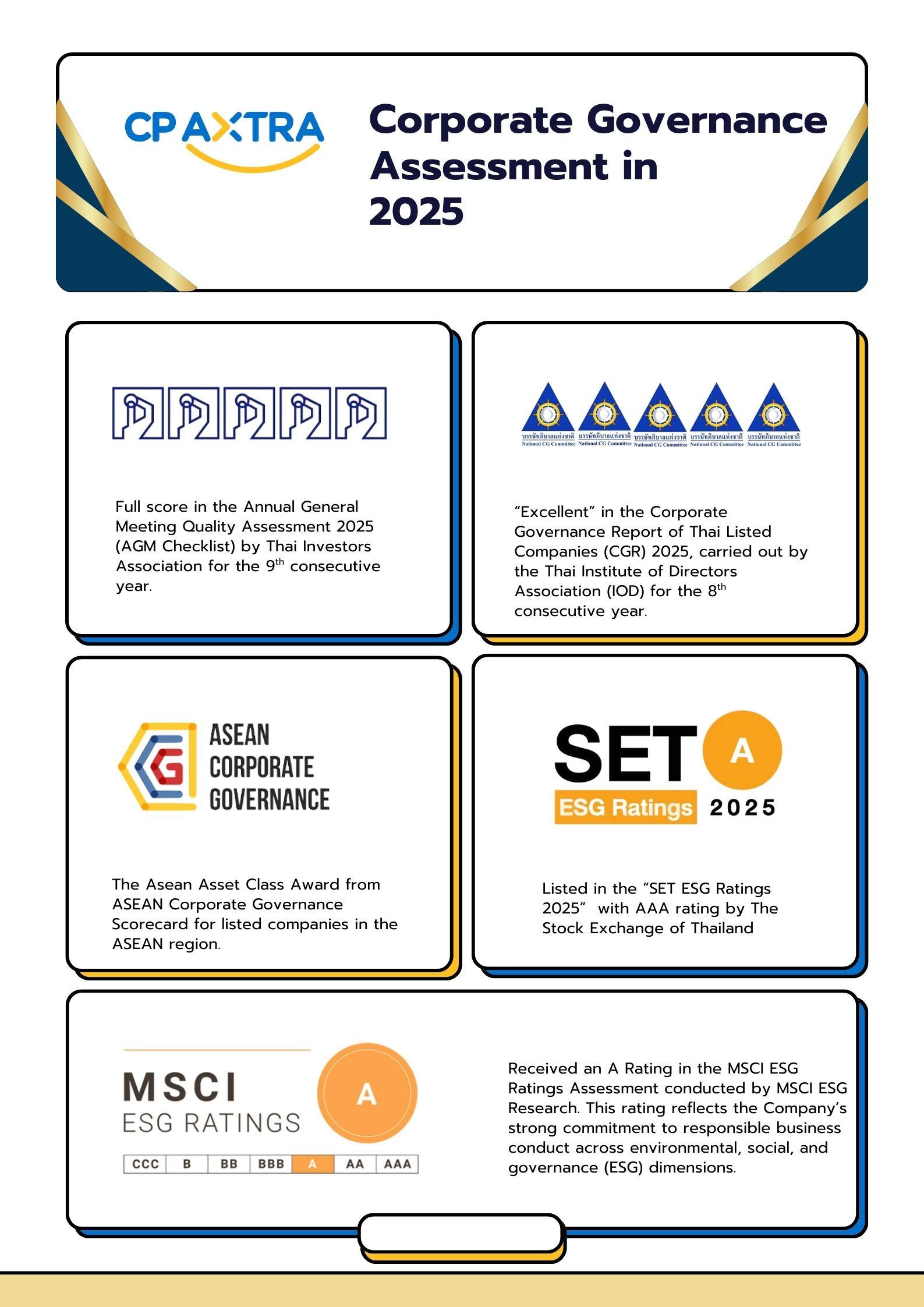
Oversaw and monitored the disclosure of corporate governance information in the Annual Report (Form 56-1 One Report) and on the Company’s website (www.cpaxtra.com ), as well as the disclosure of the Company’s operating results and relevant information for shareholders, investors, and the general public. Such disclosures were complete, sufficient, timely, and reliable. As a result, the Company received an “Excellent” rating under the Corporate Governance Report of Thai Listed Companies (CGR) for 2025 for the 8th consecutive year.
Recognised under the ASEAN Asset Class PLCs category by the ASEAN Corporate Governance Scorecard.
Oversaw the organization of the 2025 Annual General Meeting of Shareholders (AGM) in electronic format (e-AGM), ensuring that meeting information was disclosed to shareholders sufficiently in advance and promptly. Shareholders were informed of the applicable meeting rules and procedures for participation via electronic means through prior publication on the Company’s website. The Company also facilitated shareholders’ rights to attend the meeting and cast votes electronically (E-Voting) on each agenda clearly and transparently. In 2025, the Company achieved a full score of 100 under the AGM Checklist Assessment for the 9th consecutive year.
Oversaw and monitored the annual performance evaluation of the Board of Directors as a whole, individual directors, and all sub-committees for 2025. The Company disclosed information regarding the evaluation criteria, processes, results, and the application of evaluation outcomes to further enhance the Board’s effectiveness.
Monitored compliance with the corporate governance framework across directors, executives, and employees at all levels, including the 2025 annual conflict of interest disclosures, acknowledgement of Company policies through designated online systems, completion of mandatory Code of Conduct training for new employees and annual refresher programs for existing employees, as well as the annual governance and compliance perception survey. The results were utilised to formulate improvement plans for the following year. In 2025, 100% of directors, executives, and employees completed the required actions.
Oversaw and monitored directors and executives compliance with legal requirements relating to securities holdings reporting. The Company Secretary collected relevant information and reported it to the Board of Directors on a quarterly basis.
The Company also enforced strict guidelines on the use of inside information (Insider Trading), requiring directors, executives, and persons with access to inside information to refrain from trading the Company’s securities during prescribed blackout periods before and after the disclosure of financial statements. In cases where trading is necessary, such persons must notify the Company Secretary at least one day prior to the transaction.
Oversaw and monitored the processes, systems, and control mechanisms for the prevention of corruption. In 2025, the Board approved the Company’s participation in a self-assessment to further enhance its anti-corruption framework in preparation for certification as a member of the Thai Private Sector Collective Action Against Corruption (CAC) under the new legal entity name following the amalgamation on 1 October 2024. The Company declared its intention to join the CAC and was certified as a member on 26 December 2025. The certification is valid for three years (2025–2028). This reflects the Company’s firm commitment to conducting business with integrity, transparency, and accountability, and its readiness to advance toward becoming a CAC Change Agent by encouraging suppliers, business partners, and affiliated companies to strengthen their anti-corruption systems, thereby fostering a transparent and sustainable supply chain.
Participated in the Call It Out campaign organised by the Thai Private Sector Collective Action against Corruption (CAC) in collaboration with the National Anti-Corruption Commission of Thailand (NACC). The initiative aims to reinforce the Company’s commitment to combating corruption, strengthening corporate governance, and promoting a culture of transparency within the organization. The campaign encourages employees to report any solicitation of bribes through secure and reliable channels, while building confidence in the Company’s whistleblowing mechanisms, which play an important role in preventing corruption and fostering a culture of integrity.
Communicated the No Gift Policy to all employees through internal communication channels and issued formal letters requesting cooperation from suppliers, business partners, and relevant entities within the CP Axtra Group to refrain from offering gifts or benefits to executives and employees, in order to prevent circumstances that may lead to violations of the Anti-Corruption Policy.
Monitored the reporting of gift giving and receipt in accordance with the Company’s guidelines on sponsorships, gifts and hospitality, tokens of appreciation, and charitable contributions. In cases where gifts or other benefits cannot be declined or returned, recipients are required to report such acceptance to their supervisors in accordance with the prescribed reporting procedures and submit the items to the designated central unit for consolidation and subsequent charitable donation.
Supported the “CG Office” as a whistleblowing channel for reporting suspected fraud, misconduct, inappropriate behavior, or violations of laws, regulations, and corporate governance principles. The Company encourages employees at all levels and stakeholders to report concerns through secure and confidential channels, fostering a transparent and open working environment. The CG Office ensures confidentiality, protection of whistleblowers, fairness in the investigation process, and appropriate remediation for affected parties.
Conducted 2025 Annual Supplier Training to enhance awareness and compliance with the Supplier Code of Conduct, including anti-corruption practices, as well as environmental measures and responsible supply chain management..
Anti-Corruption Networks & Projects
Joined or Declared Intent to Join Anti-Corruption Networks
Yes
Networks & Projects Joined
| Network / Project | Network Name — Please Specify | CAC Certified |
|---|---|---|
| Thai Private Sector Collective Action Against Corruption: CAC | Y | |
| United Nations Global Compact (UNGC) | ||
| Participation of anti-Corruption networks and initiatives | Anti-Corruption Organization of Thailand |
Material Changes & Developments in CG
Reviewed the CG Policy or Board Charter in the Past Year
Yes
Material Changes or Developments in the Past Year
Yes
Policy Review — Description
Amid global capital market challenges, economic volatility, and rapid technological transformation, the Company recognizes that elevating its corporate governance standards to keep pace with the dynamic business and capital market environment is a critical strategic imperative. Corporate governance is not merely a matter of compliance with applicable laws and regulations; rather, it serves as a fundamental foundation that enables the Company to adapt to uncertainty, strengthen its competitive advantage, and achieve tangible long-term sustainability. The Board of Directors places significant emphasis on conducting business with transparency, accountability, and responsibility toward all stakeholders. The Company is committed to continuously strengthening its corporate governance structure in alignment with the principles of good corporate governance (CG Code), as well as nationally recognized best practices and international standards, which serve as key mechanisms in enhancing organizational credibility and stability.
In 2025, the Company reviewed and revised its corporate governance policies and practices to ensure clarity, comprehensiveness, and alignment with applicable regulatory requirements, as well as consistency with the Company’s strategic growth direction. The revisions were undertaken with due consideration for the creation of long-term sustainable value for shareholders and stakeholders. Key developments were as follows;
Revision of the Corporate Governance Policy
Revision of the Code of Conduct
Revision of the Supplier Code of Conduct Manual
Revision of the Conflict of Interest Management Practices
Revision of the Guidelines on sponsorships, gifts and hospitality, tokens of appreciation, and charitable contributions
The Company also continuously promoted awareness and understanding of good corporate governance principles, business ethics, and anti-corruption practices among directors, executives, employees, and stakeholders, both internal and external, with an emphasis on practical implementation. Communication was conducted through various channels, CG Day activities, Thailand Anti-Corruption Day, and International Anti-Corruption Day.
Promoted and followed a mandatory Code of Conduct training and assessments for new employees, annual refresher programs for existing employees, such as Anti-Corruption training, the annual Manager Ethics program for supervisory-level employees and above, and the annual governance and compliance perception survey. In addition, the Company required directors, executives, and employees to submit annual conflict of interest disclosures through the designated reporting channels.
Developed a Corporate Governance Plan to provide a clear direction for governance implementation, enabling systematic monitoring, evaluation, and continuous improvement.
Furthermore, to demonstrate its commitment to conducting business with integrity, transparency, accountability, and zero tolerance for corruption in all forms, the Company was certified as a member of the Thai Private Sector Collective Action Against Corruption (CAC), with the certification announced on 26 December 2025. The certification is valid for three years (2025–2028). The Company remains committed to encouraging suppliers, business partners, and affiliated companies to strengthen their anti-corruption frameworks and to join the CAC declaration, thereby promoting a transparent and sustainable supply chain.
Implements the CG Code for Listed Companies
No
CG Code — Description
The Company places significant importance on regularly reviewing the appropriateness of its compliance with the Corporate Governance Code for Listed Companies 2017 (CG Code), as issued by the Securities and Exchange Commission. The Company has consistently applied the CG Code in alignment with its business context on an annual basis to enhance transparency, strengthen the accountability of the Board of Directors, and build credibility among shareholders and all stakeholders. This commitment aims to create sustainable value for the business in accordance with the expectations of the business sector, investors, the capital market, and society as a whole.
The Board of Directors, with recommendations and careful consideration from the Corporate Governance and Sustainable Development Committee, has reviewed the adoption of the CG Code with due care and prudent judgment. The Board has thoroughly assessed the significance of implementing such principles in a practical and tangible manner in order to strengthen an effective and transparent governance framework, thereby supporting the Company in achieving strong operational performance and sustainable long-term growth.
However, for certain CG Code practices that are not yet fully aligned with or suitable for the Company’s business nature and context, the Board of Directors has carefully and responsibly reviewed their applicability. The reasons for non-compliance and the alternative measures adopted have been duly recorded as part of the Board’s resolutions to ensure that corporate governance remains effective and appropriate.
In 2025, there remain three key CG Code practices that have not yet been fully implemented. The Company has disclosed the relevant details, justifications, and alternative measures adopted to enable stakeholders to assess their appropriateness and to transparently and comprehensively monitor the Company’s corporate governance development.
1. The Board of Directors consists of no less than 5 directors and should not exceed 12 directors.
Company Practices
The Company needs more than 12 directors, and the current number of 16 directors is appropriate for the type, size, and complexity of the Company’s business so that it can efficiently supervise the management of subsidiaries.
2. The Chairman of the Board should be an Independent Director.
Company Practices
The Chairman of the Board is not an independent director since the Company’s business is complicated, and there is a need for a leader who is capable and experienced as well as with extensive knowledge of the Company’s business. Although the Chairman is not an independent director, the Company has in place an internal control system that incorporates operating mechanisms to achieve a balance of power, is transparent and based on the principles of good corporate governance and performs its duties by taking into account the interests of all stakeholders.
3. The Company shall appoint an external consultant to help determine guidelines and recommend issues in evaluating
the performance of the Board of Directors at least every three years and disclosed in the annual report.
Company Practices
The Company has not yet appointed an external consultant to help determine guidelines and recommend the required procedures and process for the Board performance evaluation that should be undertaken at least every 3 years. The results shall be disclosed in the Company’s Annual Report. However, the Board, an individual director and each sub-committee currently undertake an annual self-assessment of their performance every year. Nevertheless, the Company has revised the self-assessment form as per the guidance of the Thai Institute of Directors Association. Every director can express their comments independently. The results of the self-assessment performance are used to develop further the effectiveness of the duties of the Board of Directors, and both the criteria and the process are
disclosed in the Company’s Annual Report
Other CG Performance & Outcomes
The company conducts regular reviews and improvements to its policies and practices in accordance with the principles of good corporate governance on an annual basis. This ensures compliance with corporate governance standards at both national and international levels, such as the Corporate Governance Code (CG Code) for listed companies by the Securities and Exchange Commission (SEC) and the Corporate Governance Report of Thai Listed Companies: CGR by the Thai Institute of Directors (IOD). The corporate governance assessment results for 2025 are summarized as follows:
Annual General Meeting (AGM) 2025: The company successfully conducted its AGM through an electronic platform (e-AGM) in full compliance with applicable laws, good governance principles, and best practices. As a result, the company achieved a perfect score of 100 in the AGM Checklist evaluation by the Thai Investors Association (TIA) for the 9th consecutive year.
Corporate Disclosure: The company ensures that all publicly disclosed information aligns with the regulatory requirements, including the Annual Report (56-1 One Report) and the company’s website. Consequently, the company was rated as “Excellent” (5 stars) in the 2025 Corporate Governance Report of Thai Listed Companies: CGR for the 8th consecutive year by the Thai Institute of Directors (IOD), with support from the Stock Exchange of Thailand (SET) and the Securities and Exchange Commission (SEC).
The company received an “AAA” rating in the 2025 SET ESG Ratings.
The Company received the ASEAN Corporate Governance Award under the “ASEAN Asset Class PLCs” category from the ASEAN Corporate Governance Scorecard in August 2025.
The Company was also certified as a member of the Thai Private Sector Collective Action Against Corruption (CAC) on 26 December 2025. The certification is valid for three years (2025–2028). This recognition reflects the Company’s commitment to conducting business with integrity, transparency, and accountability. The Company remains dedicated to advancing toward its goal of becoming a CAC Change Agent by encouraging suppliers, business partners, and affiliated companies to strengthen their anti-corruption frameworks, thereby fostering a transparent and sustainable supply chain.
Received an “A” rating in the MSCI ESG Ratings assessment, as evaluated by MSCI ESG Research, a globally recognized provider of ESG indices and research. This rating reflects the Company’s commitment to responsible business conduct across environmental, social, and governance (ESG) dimensions, driven by the continuous development of key systems and initiatives.