

MD&A · 2025
In this section4 topics
Overview of Operations
Overview of Operations
4.1.1 Business overview
In 2025, both global and domestic economic environments continued to face ongoing challenges arising from geopolitical uncertainties, structural shifts in the global economy, and a gradual recovery in purchasing power. These factors collectively impacted the growth trajectory of the business sector and the overall economy, both in Thailand and in the countries where the Company operates.
In Thailand, the economy experienced a slowdown compared to the previous year due to economic uncertainties, including high household debt levels and the risk of debt defaults. Furthermore, private investment saw limited recovery, affecting business confidence, while the manufacturing sector recovered slowly, partly due to the influx of Chinese imports and intensifying competition from multinational platforms. Additionally, the decline in foreign tourist arrivals and the appreciation of the Thai Baht have pressured both the export and tourism sectors. Consequently, the NESDC reported the economic growth rate to expand by 2.4%.
In 2025, the Company successfully expanded its footprint by opening 131 new stores across domestic and oversea. Simultaneously, Omni Channel sales continued to grow in line with strategic plans, reinforcing the Company’s position as the leader in Thailand’s Grocery E-commerce market. Notably, Makro PRO was ranked as the No. 1 Thai E-commerce platform and the No. 1 E-commerce platform in Thailand for First-party (1P) sales, according to Euromonitor International. The Company provides seamless customer experience by developing technology and supply chain systems in collaboration with world reputable partners. The Company leverages its strengths across wholesale and retail operations, utilizing a combined network of over 2,600 branches nationwide, as distribution and delivery hubs, while also enhancing the productivity of B2B sales teams.
In addition, the Company remains committed to developing differentiated and value-driven products and services, particularly in fresh food, ready-to-cook, and ready-to-eat categories. This includes direct sourcing and the expansion of Private label products to enhance competitiveness and address evolving consumer behaviors. Furthermore, the Company pursued an aggressive expansion strategy in 2025 by entering high-potential markets. This included the acquisition of Renewed Hope Pte. Ltd. under the Lucky Frozen (“LFG”) brand in Malaysia, and a joint venture with Ayala Corporation, a prominent local partner in the Philippines. These moves aim to diversify growth sources and scale regional capabilities.
For commercial lease space and mall management, the Company focuses on maximizing the potential of existing assets by strategically selecting branches in strategic locations and high-potential development areas to enhance store appeal and elevate the shopping experience, tailored to the specific needs of customers in each area. Simultameaously, the Company actively attracts local entrepreneurs and strategic partners to diversify product and service offerings. Moreover, the Company places strong emphasis on introducing innovative and experiential elements to better serve consumers, such as innovative dining concepts, experiential zones, and distinctive brands, particularly wellness, aesthetics, technology and fashion. This aligns with the mission to be the happy mall. These strategies optimize the assets and space utilization, thereby strengthening the Company’s competitiveness and creating sustainable long-term value.
4.1.2 Operating results
(1) Operating results of the Company
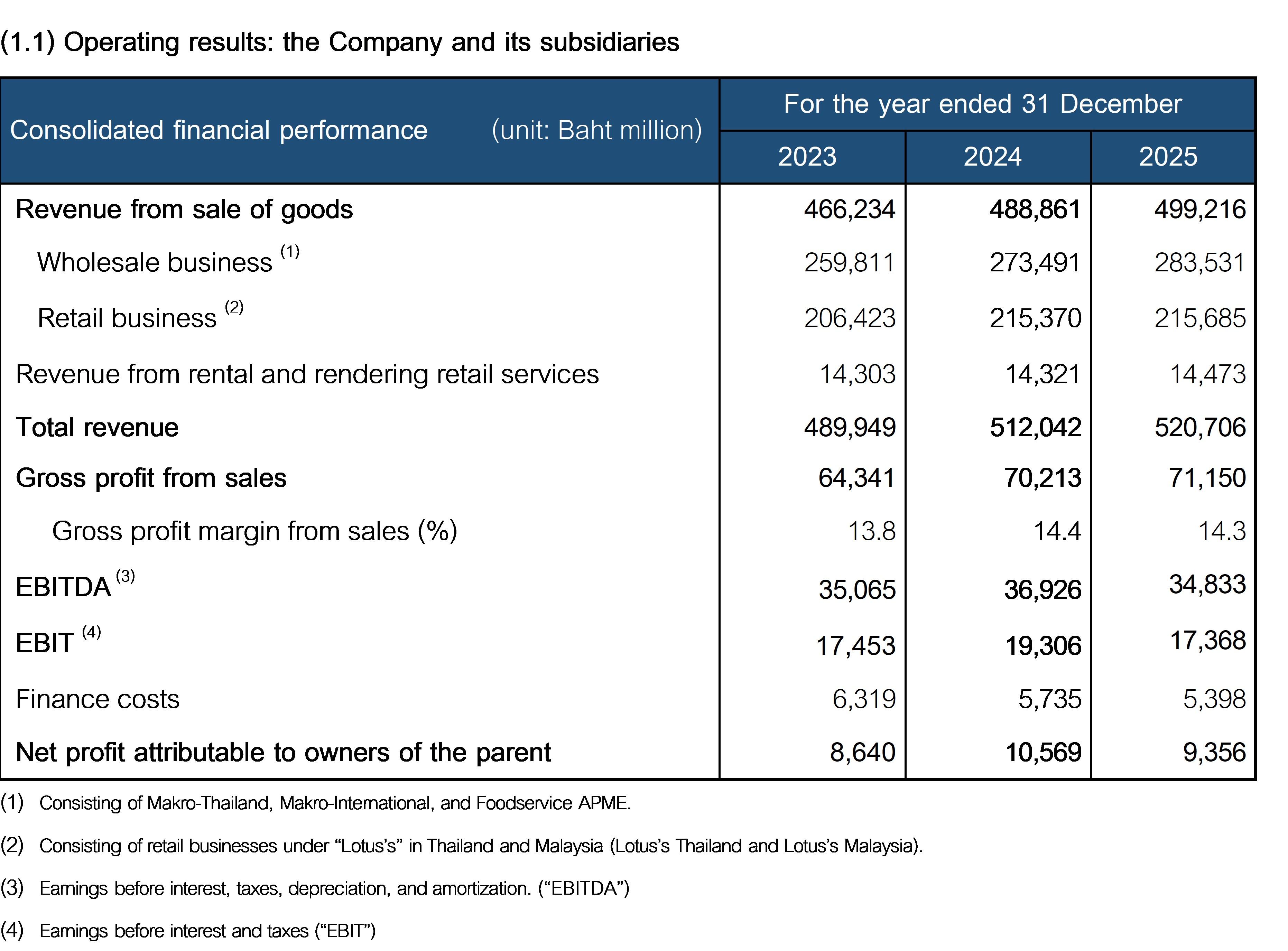
(1.2) Operating results of the Company and its subsidiaries for the year 2025
Revenue
In 2025, the Company and its subsidiaries generated total revenue of Baht 520,706 million, an increase of Baht 8,664 million or 1.7% Year-on-Year (“YoY”). Revenue from sale of goods was Baht 499,216 million, increasing by Baht 10,355 million or 2.1% YoY. The increase in revenue was primarily driven by the wholesale business, which grew by 3.7% YoY, mainly attributable to new store openings and continued growth of out-of-store sales with last-mile delivery services to customers (“Omni Channel”), supported by the growth in fresh food category and the Company’s private label products. Meanwhile, revenue from the retail business remained broadly in line with the last year, driven by the retail business in Malaysia and a strategic focus on the fresh food, ready-to-cook products, and Omni Channel sales.
The Omni Channel continued to scale in line with strategic priorities, accounting for 22.2% of the Company and its subsidiaries’ revenue from sale of goods in the fourth quarter of 2025 (“Q4/2025”). Consequently, for the full year 2025, the Omni Channel reached 21.3% of the revenue from sale of goods which rose from 18.0% in the previous year, reflecting an expansion of the active customer base.
In 2025, the Company and its subsidiaries generated revenue from rendering of services and other income totaling Baht 7,017 million, declining by Baht 1,843 million or 20.8% YoY. This was primarily due to a change in accounting classification, whereby sales support received from business partners was reclassified from revenue from rendering of services to a reduction in the cost of sale of goods.
Revenue from rental and rendering retail services
In 2025, the Company and its subsidiaries reported revenue from rental and rendering retail services of Baht 14,473 million, increased by 1.1% YoY. Gross profit from rental and rendering retail services stood at Baht 8,002 million, an increase of Baht 103 million or 1.3% YoY, with a gross profit margin of 55.3%, compared to 55.2% in the previous year. Average occupancy rates in 2025 showed at 92.0% in Thailand and 91.0% in Malaysia, reflecting temporary renovation to enhance long-term competitiveness.
Gross profit from sales
In 2025, the Company and its subsidiaries recorded a gross profit from sales of Baht 71,150 million, an increase of Baht 937 million or 1.3% YoY. The gross profit margin from sales slightly eased to 14.3% from 14.4% in the previous year, mainly due to a lower contribution from sales of the dry grocery non-food category, which typically carries high margins, amid cautious customer spending and short-term pricing strategies under a challenging market environment.
Distribution costs and administrative expenses
In 2025, the Company and its subsidiaries posted distribution costs and administrative expenses totaling Baht 69,381 million or rose by 1.5% YoY. Primarily, the increase was due to higher expenses related to online sales in line with Omni Channel growth and new store openings. However, the growth rate of distribution costs and administrative expenses was lower than the growth rate of revenue from sale of goods, reflecting the Company’s strict and efficient cost control.
The proportion of distribution costs and administrative expenses to total revenue remained stable at 13.3%. The proportion of distribution costs and administrative expenses to total revenue for the wholesale and retail businesses was 10.0% and 17.4%, respectively.
Earnings before interest, taxes, depreciation, and amortization (“EBITDA”)
In 2025, the Company and its subsidiaries earned EBITDA of Baht 34,833 million, representing 6.7% of total revenue. Nonetheless, the wholesale business achieved EBITDA growth of 3.9% YoY.
Earnings before interest and taxes (“EBIT”)
In 2025, the Company and its subsidiaries showed EBIT of Baht 17,368 million, representing 3.3% of total revenue. Meanwhile, the wholesale business reported an increase in EBIT at 5.6% YoY.
Net profit attributable to owners of the parent (“net profit”)
In 2025, the Company and its subsidiaries generated net profit of Baht 9,356 million, representing 1.8% of total revenue compared to 2.1% in the previous year, which resulted from the lower gross profit margin. Nevertheless, the Company’s finance costs decreased YoY due to efficient financial cost management despite an increase in the interest-bearing debt compared to previous year.
(2) Operating results by business division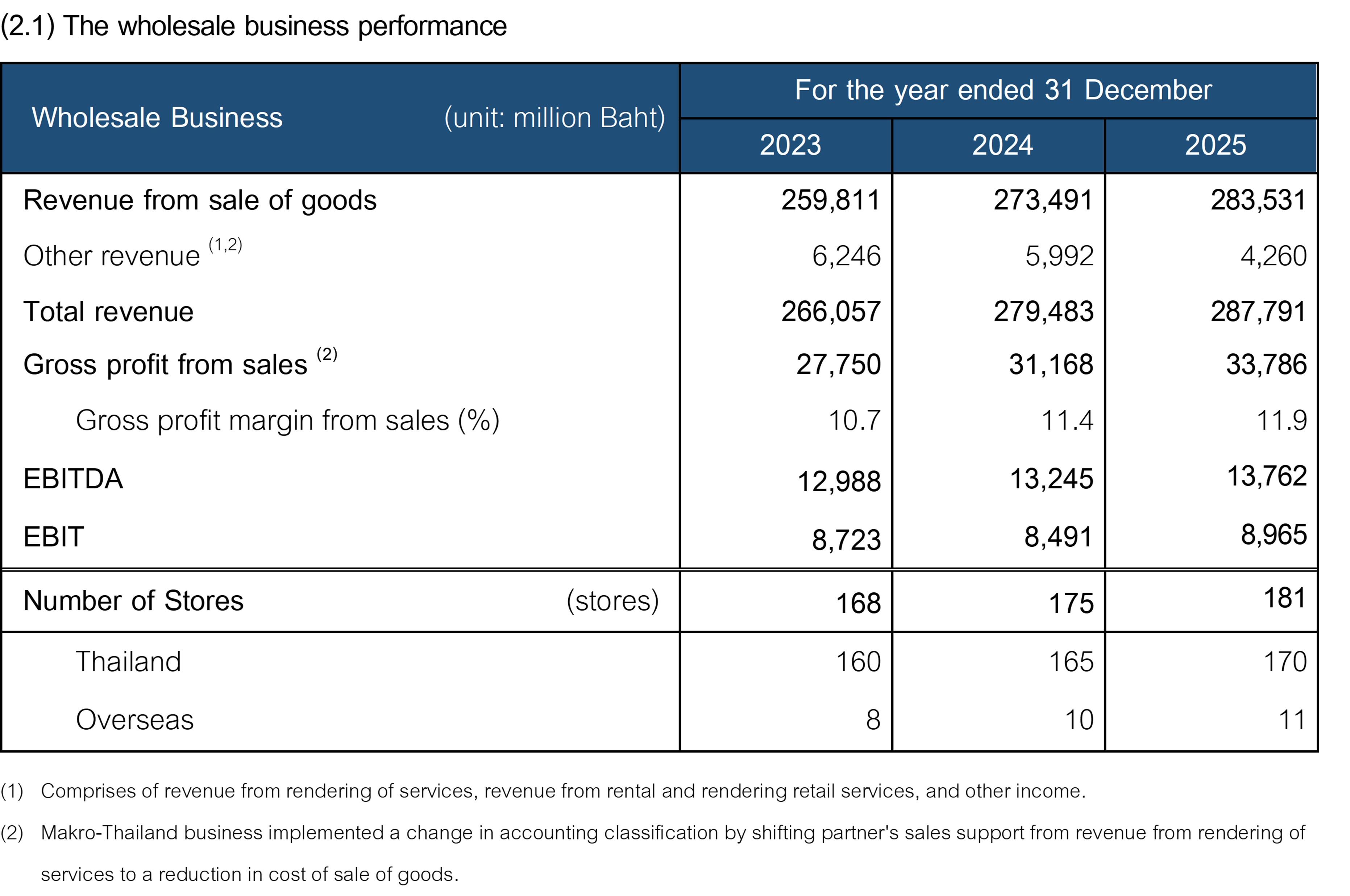
(2.1.1) Operating results of the wholesale business for the year 2025
Revenue
In 2025, the wholesale business reported total revenue of Baht 287,791 million, an increase of Baht 8,308 million or 3.0% YoY. Supportively, the revenue from the sale of goods amounted to Baht 283,531 million, a rise of Baht 10,040 million or 3.7% YoY, driven by Makro-Thailand and Foodservice APME. Growth was primarily driven by new store openings in high-potential locations both domestically and overseas, together with the continued rise in Omni Channel sales. Additionally, sales growth in the fresh food category and private label contributed to this uplift.
Amid challenging conditions, including a weak domestic economic environment and the weather-related impact, the Company continued to implement strategic plans aligned with each operating environment. As a result, a same-store sales growth (“SSSG”) for the wholesale business remained stable.
Furthermore, the acquisition of Renewed Hope Pte. Ltd., under the flagship brand of Lucky Frozen (“LFG”), was completed in late August 2025. This enabled the Company to begin recognizing additional revenue from the sale of goods and further strengthen the Foodservice APME business, aligning with the Company’s strategy to expand across the ASEAN region.
In 2025, the wholesale business recorded revenue from the rendering of services of Baht 2,647 million and other income of Baht 974 million, totaling Baht 3,621 million, a decrease of Baht 1,847 million or 33.8% YoY. The decline was mainly due to the classification of sales support from partners, which was shifted from revenue from rendering of services to a reduction in cost of sale of goods.
As at 31 December 2025, the wholesale business had a total sales space of 976,326 square meters, comprising 927,561 square meters in Thailand and 48,765 square meters in oversea.
Revenue from rental and rendering retail services
In 2025, the wholesale business reported revenue from rental and rendering retail services of Baht 639 million, growing by Baht 115 million or 22.0% YoY. This growth was supported by the expansion of net leasable areas, including new store openings and mall extensions in existing stores, achieving higher return on space.
Gross profit from sales
In 2025, the wholesale business posted a gross profit from sales of Baht 33,786 million, up Baht 2,618 million or 8.4% YoY, with the gross profit margin improving to 11.9% from 11.4% in the previous year.
Distribution costs and administrative expenses
In 2025, the wholesale business recognized distribution costs and administrative expenses totaling Baht 28,855 million which increased by Baht 336 million or 1.2% YoY. This represented 10.0% of total revenue, improving from 10.2% in the previous year. The change was primarily due to:
Distribution costs rose by Baht 1,269 million or 6.0% YoY, reflecting expenses related to Omni Channel sales growth. Hence, the proportion of distribution costs to total revenue stood at 7.7%.
Administrative expenses dropped by Baht 933 million or 12.5% YoY because the previous year had the pre-operating expenses related to the Wangnoi Distribution Center project of Makro-Thailand. Hence, the proportion of administrative expenses to total revenue improved to 2.3%.
Earnings before interest, taxes, depreciation, and amortization (“EBITDA”)
In 2025, the wholesale business delivered EBITDA of Baht 13,762 million, representing 4.8% of total revenue with the support from Makro-Thailand and Foodservice APME.
Earnings before interest and taxes (“EBIT”)
In 2025, the wholesale business reported EBIT of Baht 8,965 million, representing 3.1% of total revenue, underpinned by the growth in total revenue and gross profit as well as improved cost efficiency.
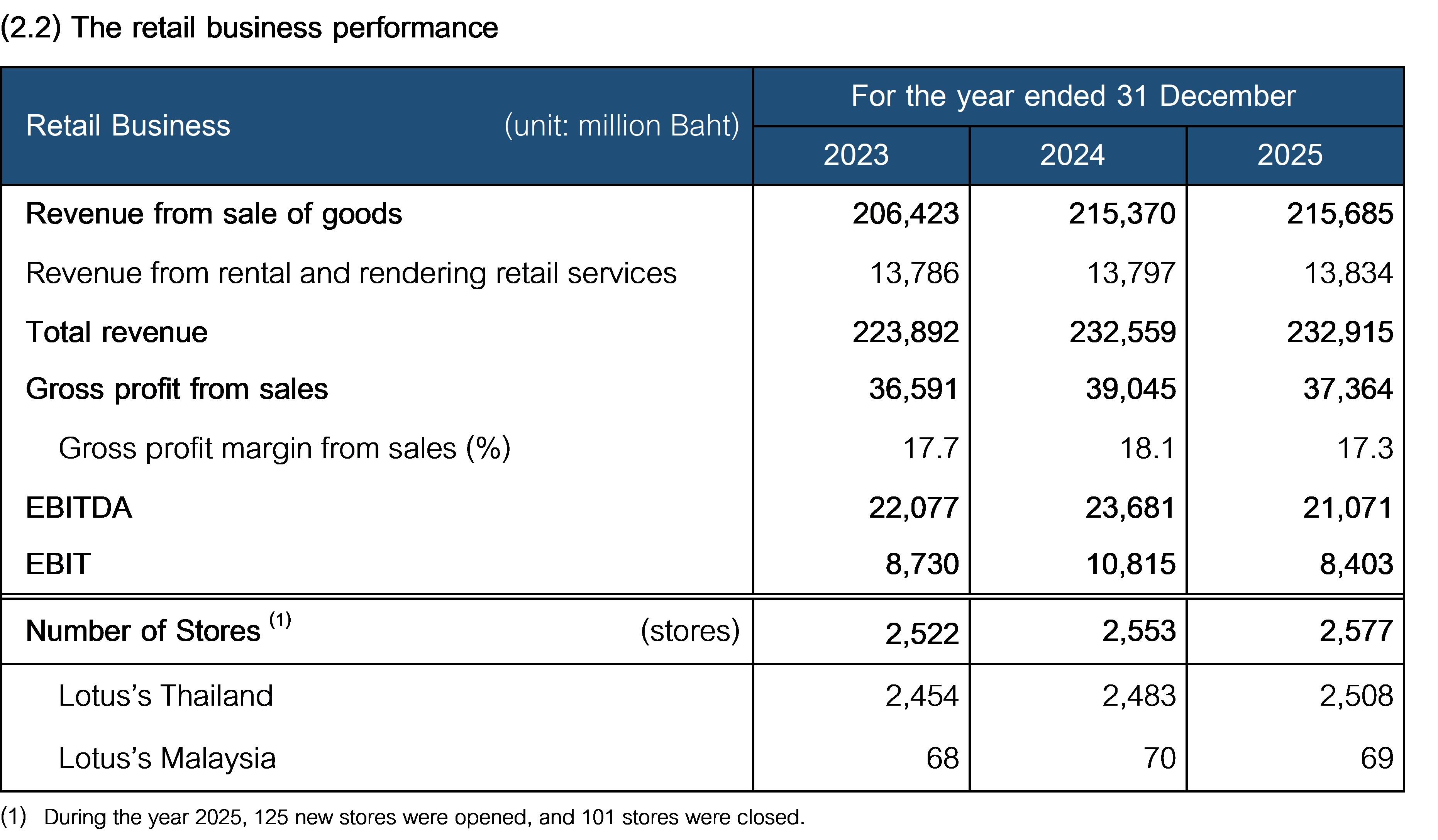
(2.2.1) Operating results of the retail business for the year 2025
Revenue
In 2025, the retail business reported total revenue of Baht 232,915 million, an increase of Baht 356 million or 0.2% YoY. Revenue from sale of goods amounted to Baht 215,685 million, rising by Baht 315 million or 0.1% YoY. The growth was primarily supported by the retail business in Malaysia which benefited from government stimulus measures that boosted consumer spending on essential grocery. In contrast, revenue from sale of goods in Thailand slightly softened compared to the previous year due to limited economic growth and weakening consumer purchasing power leading to heightened competition in the retail market.
Particularly, in Q4/2025, there was one-time event which impacted operating performance including
IT Security Incidents: External cyber threats to the information technology system disrupted online sales operations and hindered effective inventory management for several weeks. The issue has been fully resolved.
Government Stimulus Measures: The government’s co-payment stimulus program led to a temporary shift in consumer purchasing behavior.
Other Short-term Externalities: Other transitory events, including flooding in the Southern part and unrest in border areas.
As a result, same-store sales in 2025 of the retail business eased slightly by 2.0%.
As at 31 December 2025, the retail business had a total sales space of 1,849,441 square meters, comprising 1,550,518 square meters in Thailand and 298,923 square meters in Malaysia.
Revenue from rental and rendering retail services
In 2025, the retail business recorded revenue from rental and rendering retail services of Baht 13,834 million, an increase of Baht 37 million or 0.3% YoY, attributable to an expansion in net leasable area.
Gross profit from sales
In 2025, the retail business posted gross profit from sales of Baht 37,364 million, easing by 4.3% YoY, resulting in a gross profit margin of 17.3%. The decrease was primarily attributable to a shift in product mix, with lower sales of the dry grocery non-food category, which typically carries high margins, as customers became more cautious in their spending amid subdued economic backdrops. Additional factors included short-term pricing strategies during the government stimulus measure, together with accounting provisions arising from a temporary increase in inventory levels at the end of the year to prevent the possible impact in the future.
Distribution costs and administrative expenses
In 2025, the retail business reported distribution costs and administrative expenses totaling Baht 40,526 million, an increase of Baht 706 million or 1.8% YoY. This represented 17.4% of total revenue compared to the previous year. The increase was mainly attributable to:
Distribution costs increased by Baht 1,725 million or 5.4% YoY. This was partly due to the classification of last-mile delivery costs as distribution costs, as well as an increase in online-related fees, in line with the continued expansion of online sales, and the new store opening. Thus, the proportion of distribution costs to total revenue was 14.4%.
Administrative expenses decreased by Baht 1,019 million or 12.8% YoY. This reduction was partly due to enhanced cost efficiency. Therefore, the proportion of administrative expenses to total revenue was 3.0%.
Earnings before interest, taxes, depreciation, and amortization (“EBITDA”)
In 2025, the retail business reported EBITDA of Baht 21,071 million, representing 9.0% of total revenue.
Earnings before interest and taxes (“EBIT”)
In 2025, the retail business recognized EBIT of Baht 8,403 million, representing 3.6% of total revenue, mainly due to the decline in the gross profit margin.
4.1.3 Financial position analysis of the Company
Total assets
As of 31 December 2025, the Company and its subsidiaries had total assets of Baht 576,671 million, an increase of
Baht 30,140 million. The significant changes in assets are as follows:
Cash and cash equivalent
As of 31 December 2025, the Company and its subsidiaries had cash and cash equivalents of Baht 14,558 million, a decrease of Baht 4,903 million compared to the previous year. This decrease was primarily due to investments in the construction of new stores, the renovation of existing stores, and dividend payments.
Trade accounts receivable
As of 31 December 2025, the Company and its subsidiaries had trade accounts receivable of Baht 4,044 million, an increase of Baht 1,419 million compared to the previous year. This increase was primarily due to the acquisition of LFG.
Inventories
As of 31 December 2025, the Company and its subsidiaries had inventories of Baht 46,499 million, an increase of
Baht 10,015 million compared to the previous year. This increase was in line with the higher sales, sales support during festive season, and the acquisition of LFG.
Purchase discount receivables
As of 31 December 2025, the Company and its subsidiaries had purchase discount receivables of Baht 5,716 million, an increase of Baht 482 million compared to the previous year. This increase was due to higher accumulated purchase discounts in line with purchases in 2025, as well as an increase in discounts related to promotional activities.
Investment properties
As of 31 December 2025, the Company and its subsidiaries had investment properties of Baht 59,686 million, an increase of Baht 3,223 million compared to the previous year. This increase was primarily driven by the retail business, particularly investments in the commercial space development project (The Happitat).
Property, plant, and equipment
As of 31 December 2025, the Company and its subsidiaries had property, plant, and equipment of Baht 124,285 million, an increase of Baht 6,590 million compared to the previous year. This increase was primarily from the expansion of new stores and the acquisition of LFG.
Right-of-use assets
As of 31 December 2025, the Company and its subsidiaries had right-of-use assets of Baht 48,105 million, an increase of Baht 7,026 million compared to the previous year. This increase was primarily due to the lease agreement of Wangnoi Distribution Center project and new stores, the extension of lease agreements for existing stores and contracts related to the installation of solar panels.
Goodwill
As of 31 December 2025, the Company and its subsidiaries had goodwill of Baht 237,750 million, an increase of
Baht 3,014 million compared to the previous year. This increase was due to the acquisition of LFG.
Other intangible assets other than goodwill
As of 31 December 2025, the Company and its subsidiaries had other intangible assets other than goodwill of
Baht 12,104 million, an increase of Baht 1,273 million compared to the previous year. This increase was primarily due to the acquisition of LFG.
Total liabilities
As of 31 December 2025, the Company and its subsidiaries had total liabilities of Baht 276,284 million, an increase of Baht 28,370 million. The significant changes in liabilities are as follows:
Short-term borrowings from financial institutions
As of 31 December 2025, the Company and its subsidiaries had short-term borrowings from financial institutions of Baht 15,934 million, an increase of Baht 6,516 million compared to the previous year due to the acquisition of LFG.
Trade accounts payable to other parties
As of 31 December 2025, the Company and its subsidiaries had trade accounts payable to other parties of Baht 62,981 million, an increase of Baht 4,075 million compared to the previous year. This was in line with the higher inventory purchases to support sales during festive season.
Trade accounts payable to related parties
As of 31 December 2025, the Company and its subsidiaries had trade accounts payable to related parties of Baht 7,768 million, an increase of Baht 297 million compared to the previous year. This was in line with the higher inventory purchases to support sales during festive season.
Other current payables to other parties
As of 31 December 2025, the Company and its subsidiaries had other current payables to other parties of Baht 11,634 million, an increase of Baht 1,782 million compared to the previous year, mainly from an increase in other current payables to other parties of the retail business, following payment related to new store construction and store renovation.
Debentures
As of 31 December 2025, the Company and its subsidiaries had debentures (including the current portion) of
Baht 76,306 million, an increase of Baht 15,014 million compared to the previous year. This was mainly due to the additional issuance of new debentures to repay long-term borrowings and maturing debentures.
Long-term borrowings from financial institutions
As of 31 December 2025, the Company and its subsidiaries had long-term borrowings from financial institutions (including the current portion) totaling Baht 20,622 million, a decrease of Baht 6,825 million compared to the previous year due to the repayment of long-term borrowings.
Lease liabilities
As of 31 December 2025, the Company and its subsidiaries had lease liabilities (including the current portion) of
Baht 59,210 million, an increase of Baht 6,543 million compared to the previous year. This increase was primarily due to the lease agreement of Wangnoi Distribution Center project and new stores, the extension of lease agreements for existing stores and contracts related to the installation of solar panels
Total equity
As of 31 December 2025, the Company and its subsidiaries had total equity of Baht 300,387 million, an increase of
Baht 1,770 million compared to the previous year due to net profit and dividend payment during the year.
4.1.4 Financial Ratios
Liquidity ratio
The current ratio for the years ended 31 December 2024 and 2025 stood at 0.5 times and 0.6 times, respectively. The increase in the current ratio was primarily driven by higher inventory levels, reflecting sales growth and supporting festive season demand, together with the acquisition of LFG.
The quick ratio for the years ended 31 December 2024 and 2025 stood at 0.2 times and 0.1 times, respectively. The decrease in quick ratio was primarily due to a reduction in cash and cash equivalents, resulting from the construction of new stores, renovation of existing stores, and dividend payments.
The negative cash cycle for the years ended 31 December 2024 and 2025 stood at 24.8 days and 20.7 days, respectively. The negative cash cycle was due to the average payment periods exceeding the sum of the average inventory turnover and average collection periods. This was a result of the wholesale and retail business models, which had payment terms to suppliers of approximately 7 to 60 days and 15 to 90 days, respectively. In addition, the negative cash cycle narrowed down from the longer average inventory turnover.
Financial policy ratio
For the years ended 31 December 2024 and 2025, the net interest-bearing debt to equity ratio (in accordance with the financial obligation terms and conditions) remained stable at 0.3 times.
Leverage ratio
For the years ended 31 December 2024 and 2025, the interest coverage ratio stood at 10.4 times and 10.6 times, respectively. The increase in interest coverage was driven by a reduction in finance costs, resulting from effective financial cost management.
For the years ended 31 December 2024 and 2025, the debt service coverage ratio stood at 1.7 times and 2.0 times, respectively. This improvement was primarily due to a decrease in the current portion of long-term interest-bearing debt.
For the years ended 31 December 2024 and 2025, the interest-bearing debt to earnings before interest, taxes, depreciation, and amortization (IBD/EBITDA) stood at 4.1 times and 4.9 times, respectively. The ratio increased due to a rise in interest-bearing debt used for the acquisition of LFG and for working capital purposes.
Operating Results & Financial Condition
Operating Results & Profitability
Profitability ratio
The gross profit margins for the years ended 31 December 2024 and 2025 stood at 14.4% and 14.3%, respectively. The decrease was primarily attributable to a shift in product mix, with lower sales of the dry grocery non-food category, which typically carries high margins, as customers became more cautious in their spending amid subdued economic backdrops. An additional factor included short-term pricing strategies during the challenging market condition. Meanwhile, the operating margins for the years ended 31 December 2024 and 2025 stood at 3.8% and 3.4%, primarily from the lower in gross profit margin. Based on the above ratios, the net profit margins stood at 2.1% and 1.8% for the years ended 31 December 2024 and 2025, respectively.
For the years ended 31 December 2024 and 2025, the return on equity stood at 3.6% and 3.1% respectively, reflecting the decrease in net profit.
Efficiency ratio
For the years ended 31 December 2024 and 2025, the return on assets stood at 1.9% and 1.7%, respectively, while the return on fixed assets stood at 17.5% and 15.7%, respectively, due to the decrease in net profit.
Liquidity & Capital Adequacy
The financial position and liquidity of the Company and its subsidiaries have been and continues to be influenced by the following factors:
The Company and its subsidiaries’ ability to generate cash flow from operations;
The level of outstanding debt of the Company and its subsidiaries;
Interest expenses on debt incurred by the Company and its subsidiaries, impacting finance costs;
Market interest rates that affect the ability to pay debts of the Company and its subsidiaries;
The Company and its subsidiaries’ ability to borrow money from financial institutions;
The Company and its subsidiaries’ ability to access publicmarket for financing; and
The Company and its subsidiaries’ capital expenditure
The Company and its subsidiaries’ cash flow needs arise from the following activities, primarily:
To finance operating activities;
To fund capital expenditures;
To finance acquisitionf assets;
To invest in subsidiaries;
Dividend payments;
Debt paymentsf the Company and its subsidiaries; and
Tax payments
The Company and its subsidiaries’ sources of liquidity historically consisted, and will consist mainly of the following:
Cash from the Company and its subsidiaries’ operating activities; and
Borrowings by issuing debt instruments
The Company and its subsidiaries’ ability to generate operating cash flows depends on future operating performance, which is partly influenced by competitive conditions, the overall economic environment, financial market conditions, regulatory requirements, and other factors, many of which are beyond the Company’s control as shown in Section 2. Risk Management.
The Company believes that it has sufficient cash flow to operate the business over the next 12 months.
Cash flow of the Company
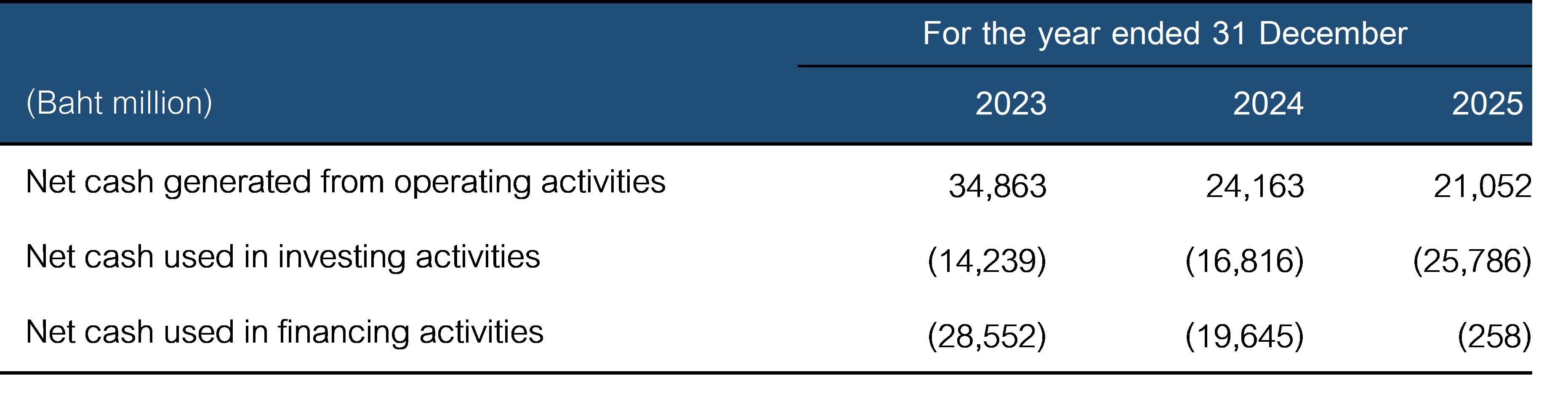
The following table presents a summary of the cash flows of the Company and its subsidiaries for the specified period.
Operating activities
For the year 2025, the Company and its subsidiaries had net cash generated from operating activities amounting to Baht 21,052 million, primarily due to operating performance, net of changes in working capital.
Investing activities
For the year 2025, the Company and its subsidiaries had net cash used in investing activities amounting to Baht 25,786 million, mainly from cash payments for the purchase of property, plant and equipment, investment properties, other intangible assets other than goodwill, as well as right-of-use assets and the acquisition of LFG.
Financing activities
For the year 2025, the Company and its subsidiaries had net cash used in financing activities amounting to Baht 258 million, primarily from the payment of lease liabilities and dividend payment. During the year, the Company also issued additional debentures to repay long-term borrowings and maturing debentures.
Financial obligation
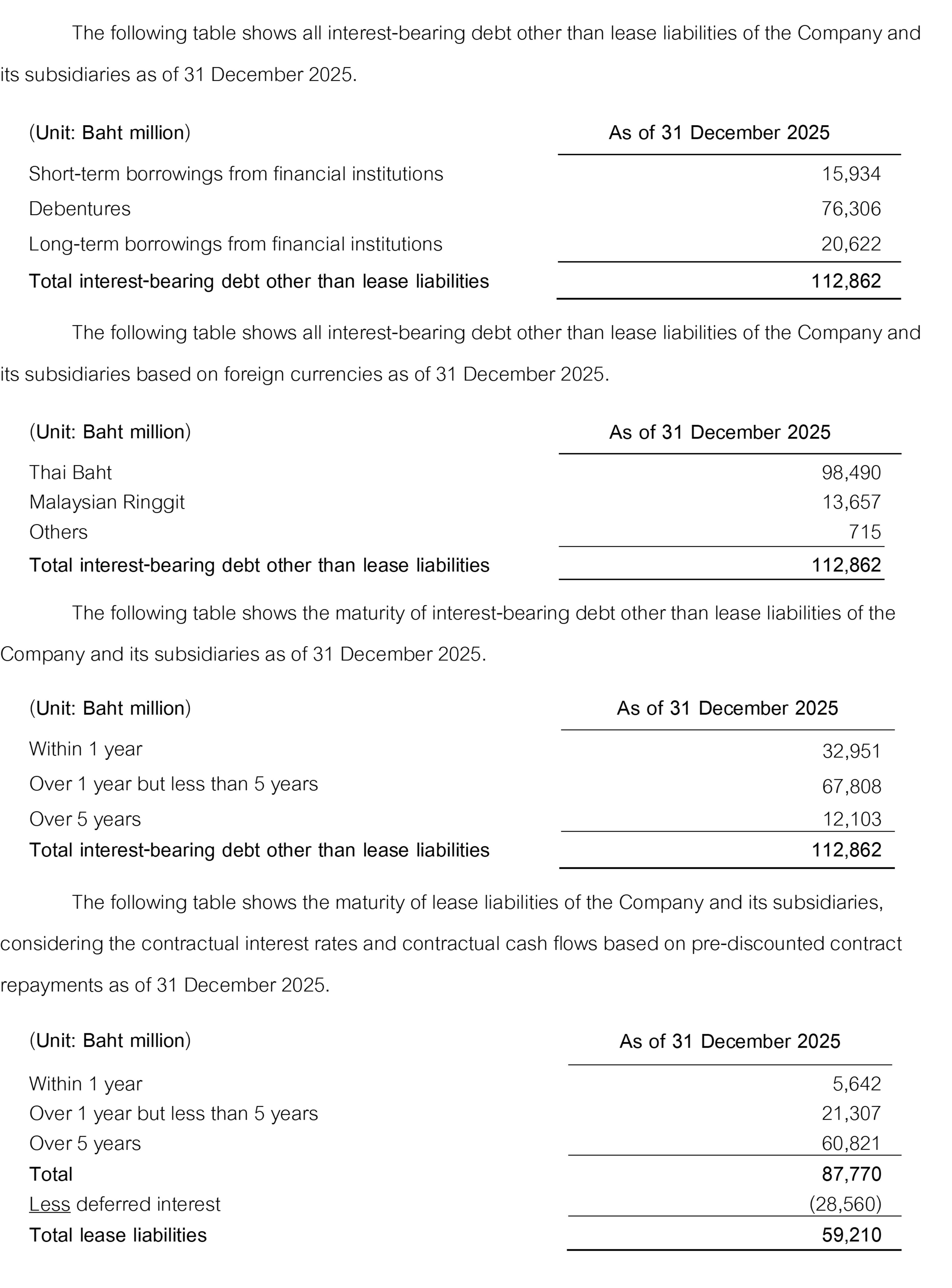
Capital expenditures
The Company and its subsidiaries paid cash for capital expenditures, consisting of the acquisition of investment properties, property, plant and equipment, right of-use-assets, and other intangible assets other than goodwill, amounting to Baht 17,123 million and Baht 19,393 million for the years ended 31 December 2024 and 2025, respectively.
The Company and its subsidiaries expect that cash and cash equivalents, cash received from business operations in the future and/or cash received from financing activities will fund the Company’s capital expenditure needs. The Company and its subsidiaries' ability to finance and repay debts on time depends on several uncertainties, including future performance, financial position, cash flow, economic conditions in Thailand and other countries where the Company and its subsidiaries operate, as well as the readiness of financial institutions to grant the Company and its subsidiaries’ credit. For the year ended 31 December 2025, the Company and its subsidiaries had capital expenditures of Baht 32,748 million.
Asset Management Capability
Goodwill and Impairment
As at 31 December 2025, the Company and its subsidiaries had goodwill amounting to Baht 237,750 million or increased Baht 3,014 million, mainly due to the acquisition of LFG. The Group tested an impairment on the carrying amount of goodwill in accordance with the relevant Thai Financial Reporting Standards (“TFRS”).
Based on the impairment testing, the recoverable amount was estimated to be higher than its carrying amount, and no impairment was required to the consolidated and separate financial statements.
Debt Obligations & Off-Balance-Sheet Management
As of 31 December 2025, the Company and its subsidiaries' contractual commitments and other significant commitments consisted of service agreements, purchase agreements, consulting agreements, intercompany agreements, operating leases, construction contracts, and bank guarantees, among others.
The ability of the Company and its subsidiaries to obtain appropriate financing to meet contractual commitments and debt repayment may be limited by its financial position and operating results, including the liquidity of domestic and international financial markets.
Off-balance sheet commitments: As of 31 December 2025, the Company and its subsidiaries were not a significant party to any material off-balance sheet commitments or other off-balance sheet relationships.
Contingent liabilities: As of 31 December 2025, the Company and its subsidiaries had no recorded significant contingent liability in its financial statements.
Material & Related-Party Transactions
For the year ended December 31, 2025, the Company and its subsidiaries did not have any significant transactions. Further details on related-party transactions have been disclosed in Section 9.2.
Debt Securities with Financial Ratio Requirements
Debt Securities with Financial Ratio Requirements Issued?
Yes
Can the Company Maintain the Reported Financial Ratios?
Yes
Explanation
The issuer shall maintain its Net Interest-Bearing Debt to Equity Ratio at no greater than 2.5:1, to be tested annually based on audited consolidated financial statements as of 31 December of each accounting period.
Factors That May Affect Financial Condition
Factors or Incidents That May Materially Affect Financial Condition
The global economy in 2026 is projected to expand at a steady level, significantly bolstered by accelerated technological investment, particularly in Artificial Intelligence (AI), alongside fiscal policies that remain instrumental in economic stimulation across several nations, and accommodative global financial conditions. Nonetheless, geopolitical tensions and trade uncertainties impacting international trade policies remain volatile and could affect global trade and investment landscapes. Although economic growth in Asia may slow compared to the prior year, it remains driven by the technology cycle and government expenditures. The Thai economy is expected to grow by a modest 2.0% due to external pressures and high domestic debt levels. However, tourism and public consumption remain key supporting factors. Within the retail business, overall sales are anticipated to recover, supporting demand for essential consumer goods in line with consumer behavior that prioritizes necessity, value, and health-focused products.
In order to cope with uncertain situations that may occur and affect the company's operation, the Company has analyzed the factors that may cause the Company’s obstacle to achieve the target and has to find solutions to prevent the following risks.
1.Risk from competition in the industry: The wholesale business, retail business, and rental space management, in which the Company operates face intense competition regarding customers, employees, locations, products, and services, including sales channels. The Company encounters a diverse range of competitors, including both traditional retailers and new digital platforms, both in Thailand and in the international markets where the Company has investments. Furthermore, rapidly changing consumer behavior is a critical factor that may require the Company to continuously adjust its strategies to align with the evolving business environment and market conditions. If the Company is unable to offer products and services that attract or meet customer needs, it could significantly impact long-term business growth, including the risk of lower-than-expected revenue and profit growth, potentially leading to a loss of market share to competitors in the future. However, the Company has dedicated significant resources to drive its Omni Channel strategy, developing online channels for both wholesale and retail businesses. This includes upgrading digital technology systems and developing Artificial Intelligence (AI) to personalize and ensure that product and service offerings precisely meet customer needs and evolving consumption trends.
2.Liquidity Risk: The Company faces volatility in economic and financial market conditions, particularly uncertainties regarding interest rates, inflation, and exchange rates, which affect operational costs and cash flow. Additionally, the execution of investment projects according to strategic plans requires additional funding. If market conditions are volatile, it may affect liquidity and the ability to manage the Company's capital structure, potentially causing delays in key investment projects and impacting financial stability as well as stakeholder confidence in the long term. Nevertheless, the Company manages liquidity systematically through continuous cash flow monitoring and the improvement of working capital management processes to increase financial flexibility. This also includes preparing reserve funding sources in the form of credit lines to maintain business continuity and promptly handle any financial volatility that may arise.
In 2026, the Company and its subsidiaries aim to achieve continued revenue growth both domestically and internationally by further strengthening the business across all dimensions. These include developing products to meet evolving customer needs, enhancing operational efficiency through Omni Channel sales, leveraging technology to improve operational efficiency and cost management, implementing targeted marketing strategies, and expanding store networks in various formats including the development of shopping centers to smart community hubs under the ‘Happy Mall’ concept. Meanwhile, international operations, particularly in ASEAN, are expected to remain an important component in driving revenue growth and be part of the Company’s long-term growth strategy coupled with a commitment to prudent and disciplined business practices.
The Company acknowledges evolving consumer behavior amid economic hiccups, with a greater focus on value and affordable alternatives. In response, the Company emphasizes high-quality, value-for-money offerings, especially healthier and eco-friendly options, while expanding the proportion of Private label, enhancing ready-to-cook and
ready-to-eat offerings and continuously developing new products. In addition, the Company is expanding range of licensed products and increasing direct sourcing to enhance gross margin and better align the product offering with evolving customer needs.
In terms of e-commerce growth, the Company aims to continuously increase the proportion of sales via out-of-store sales through applications while leveraging nationwide footprint of over 2,600 stores to serve as micro fulfillment centers for product distribution and last-mile delivery. This enhances asset utilization and reduces the last-mile delivery costs. Moreover, the Company has collaborated with leading global technology partners to advance AI-driven personalization and micro-segmentation capabilities. These efforts boost customer engagement and retention across all channels, improve inventory forecasting accuracy, strengthen operational agility and efficiency, and deliver operating cost saving, driving the Company toward becoming a ‘Retail Tech’ powered by data and innovation.
In addition, the Company continues to expand leasable space and develop new store formats tailored to the needs of customers’ segments in each location. Strategically, the Company differentiates in terms of experience and value-for-money to increase purchasing frequency and to build long-term relationships with customers. Simultaneously, the Company develops shopping centers into smart community hubs under the ‘Happy Mall’ concept by selecting strategic locations and high-potential development areas to enhance store appeal and design new leasable format under ‘Oasis’ concept. This new concept intermingles convenience and lifestyle through carefully selected business partners, supporting local entrepreneurs and attracting tenants that meet modern lifestyle needs. In addition, spaces for experiential activities including distinctive brands, particularly in wellness and aesthetics, technology and fashion are added. These strategies enhance space utilization, boost rental income, strengthen competitiveness, and support long-term asset value creation.
The Company continues to closely monitor key risks including external factors, such as global economic volatility, trade policies, geopolitical uncertainties, and exchange rate fluctuations, as well as domestic factors such as household debt levels, adverse climate conditions, competition from imported products, and the gradual recovery of consumer purchasing power. The Company regularly reviews and adjusts the business strategies to manage uncertainty and maintain sustainable long-term growth.
The Company is committed to becoming a globally recognized sustainable organization, adhering to principles that drive long-term economic, environmental, and social value, while maintaining strong corporate governance (ESG). Sustainability goals are aligned with key stakeholder priorities, the CP Group’s corporate sustainability framework, and the United Nations Sustainable Development Goals (UNSDGs).
Environmental: the Company emphasizes environmentally friendly business practices, efficient resource utilization, and minimizing impacts on ecosystems and biodiversity. It supports clean energy use and greenhouse gas emission reduction, promotes environmentally friendly packaging, efficiently manages waste generated by business operations, and focuses on developing sustainable products and eco-friendly production processes. The Company aims for zero food waste to landfill and carbon neutrality by 2030, and net-zero greenhouse gas emissions by 2050. In 2025, the Company embedded environmental initiatives as part of daily operation. Reducing food waste from store and DC operation and collaborating with local communities, successfully diverting more than 15,700 tons of food waste from landfills. Additionally, the Company established Plastic Bottle Drop Points nationwide, facilitating the collection of over 2,500,000 plastic bottles into the recycling value chain.
Social: the Company recognizes the importance of improving the quality of life in communities and focuses on creating economic value throughout the supply chain, generating employment, income, and vocational knowledge to reduce social inequalities. In 2025, the Company procured agricultural produce from local farmers and small and medium-sized enterprises (SME) of over Baht 30,000 million purchase value. Besides, the Company promotes access to nutritious food through the food donation campaign, which supported over 19,000 underprivileged students. It is our commitment to deliver high-quality and safe products, and fosters relationships with stakeholders and partners to create long-term social value.
Governance: the Company prioritizes efficient internal operations aligned with laws, regulations, and ethical business practices. It has robust risk management systems and anti-corruption measures across all levels, building trust among stakeholders through transparent and straightforward communication. Additionally, it is committed to employee development and proactively addresses cybersecurity threats.
By leveraging organizational strengths and integrating sustainability principles into all operational processes, alongside continuous monitoring and enhancement of sustainability policies, the Company aims to maximize positive economic and social impact while minimizing long-term environmental risks. Proactive risk management strategies are in place to mitigate these uncertainties and ensure business resilience in a dynamic economic landscape and evolving consumer behaviors. These efforts reinforce the Company’s position to drive sustainable revenue growth and long-term value creation for all stakeholders.
Projects or R&D Affecting Future Results
N/A